

Japanese Business Expressions: Meaning, Nuance & Professional Usage
Learn how essential Japanese expressions really work in the workplace.
If you work at a Japanese company or do business with Japanese clients, you may sometimes wonder, “What should I say in this situation?”
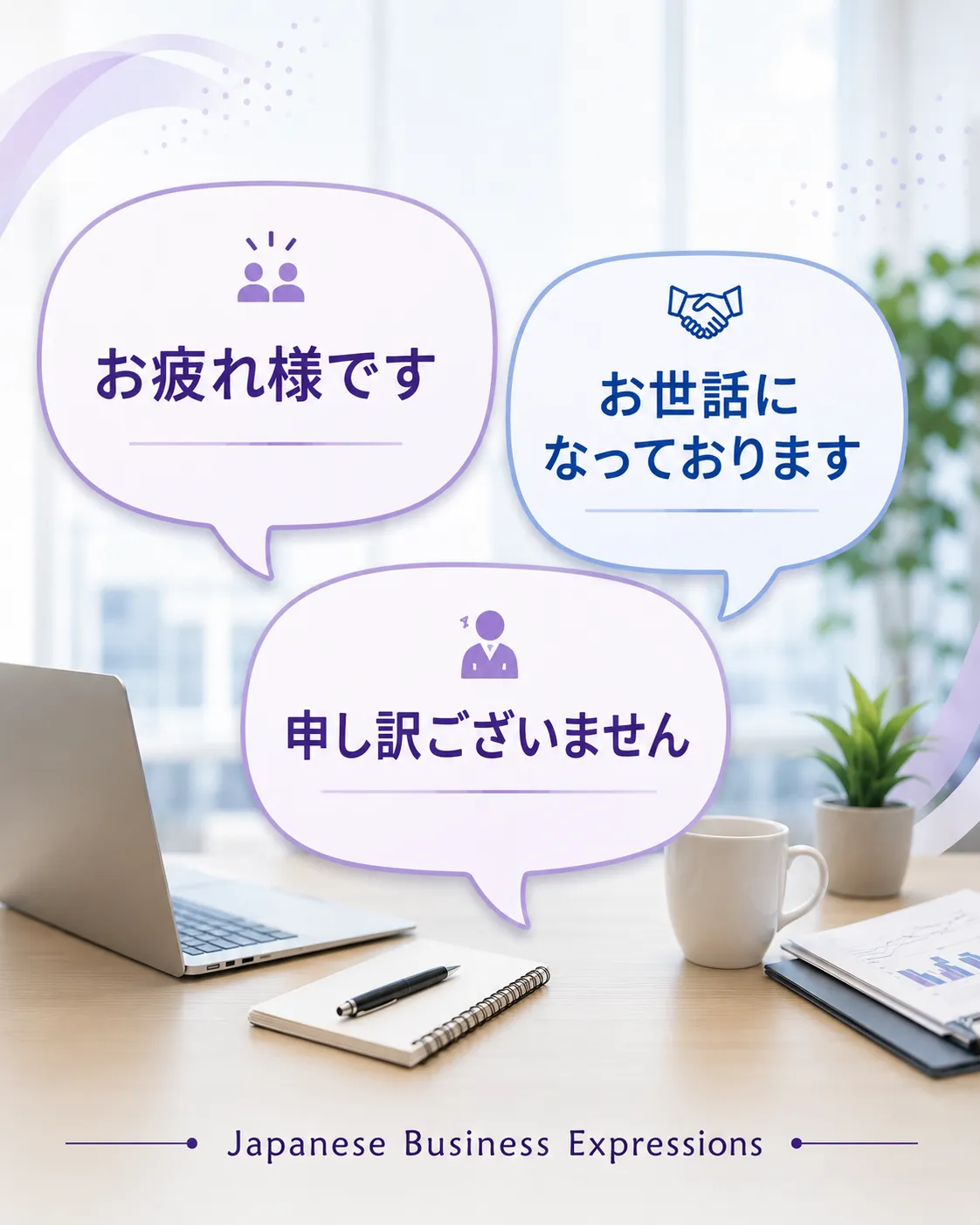
The Japanese you hear at work can be quite different from the language you studied for the JLPT or use in everyday conversation. Expressions such as otsukaresama desu, osewa ni natte orimasu, and yoroshiku onegaishimasu are common in Japanese workplaces, but their meaning and usage often depend on who you are speaking to and the situation.
This guide brings together Japonin's Deep Dive articles on essential business expressions, so you can understand not only what they mean, but when and how to use them naturally in professional communication.
Workplace Greetings & Relationship Building
Japanese workplaces have their own set of expressions that you will hear again and again. Some are used with coworkers, while others are more appropriate for clients or business partners. These three guides explain when to use these expressions and what they really communicate in a business setting.
お疲れ様です (Otsukaresama Desu)
Otsukaresama desu is much more than “good job.” Learn how coworkers use it to acknowledge effort, greet one another, and maintain a cooperative atmosphere at work.
Understand otsukaresama desu →お世話になっております (Osewa ni Natte Orimasu)
Learn why osewa ni natte orimasu is a standard opening in emails and calls with clients and business partners, and when another greeting may be more appropriate.
Learn how to use osewa ni natte orimasu →よろしくお願いします (Yoroshiku Onegaishimasu)
Yoroshiku onegaishimasu has no single English equivalent. Learn how it expresses cooperation, appreciation, and respect in requests, meetings, and business emails.
Explore yoroshiku onegaishimasu →Refusals, Apologies & Softening
In business Japanese, it is important to be clear while still showing consideration for the other person. These guides look at how to refuse, apologize, and respond politely, and when it is better to use a clearer expression.
How to Say No Politely: The Soft NO
Japanese business communication often avoids an unnecessarily direct “no.” Learn expressions for declining requests, invitations, and proposals politely while keeping the message clear.
Learn the Japanese Soft NO →結構です (Kekkou Desu)
Kekkou desu may sound grammatically polite, but it can also communicate a fairly firm refusal. Learn when it works and when a softer response may be better.
Learn how to use kekkou desu →What Does 大丈夫 (Daijoubu) Mean?
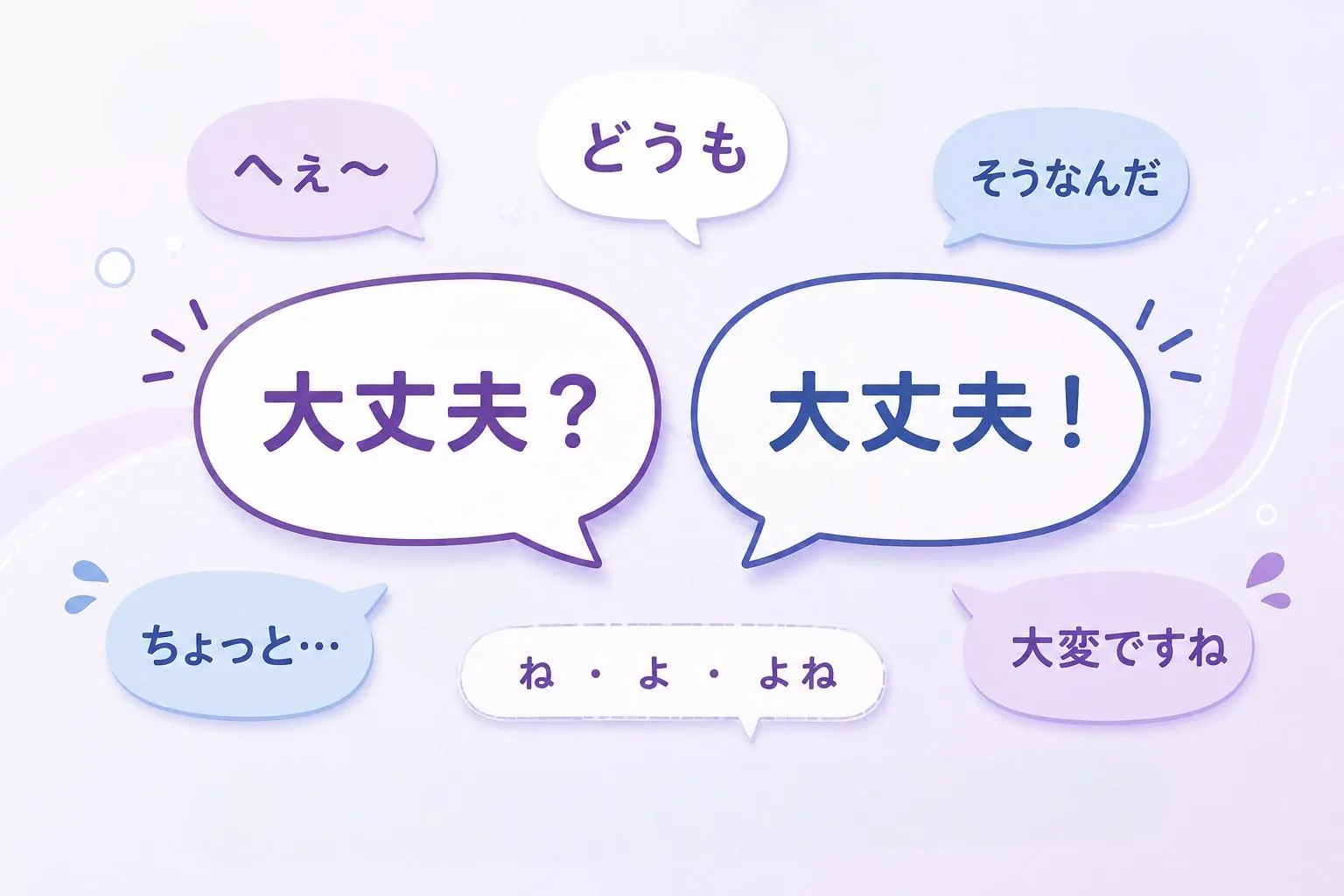
Daijoubu can mean “That's fine,” “No problem,” or “No, thank you.” Learn how context changes its meaning and why more precise wording can be useful in professional situations.
Understand daijoubu →すみません & 申し訳ございません
Learn how to choose between sumimasen and mōshiwake gozaimasen depending on the seriousness of the problem, the relationship, and the level of formality required.
Learn Japanese business apologies →Nuance & Workplace Communication
Small word choices can change how your message is understood at work. These guides look at expressions whose meaning depends on context and show how subtle differences can affect tone, confidence, and communication in the workplace.
大変 (Taihen)
Taihen can describe something difficult or serious, show empathy, or add polite emphasis. Learn how its meaning and tone shift between everyday and professional Japanese.
Explore taihen →一応 (Ichiou) vs. とりあえず (Toriaezu)
Both expressions are common in Japanese, but they can create very different impressions at work. Learn how ichiou leaves room while toriaezu helps move an action forward.
Compare ichiou and toriaezu →Which Japanese Business Guide Should You Read?
Use this quick guide to find the expression that matches the workplace situation you want to understand.
| If you want to... | Start with... |
|---|---|
| Greet coworkers naturally at work | Otsukaresama desu |
| Open an email or call with a client | Osewa ni natte orimasu |
| Ask for cooperation or close an email politely | Yoroshiku onegaishimasu |
| Decline a request without sounding too direct | Soft NO |
| Understand a polite but fairly firm refusal | Kekkou desu |
| Understand whether “daijoubu” means yes or no | Daijoubu |
| Choose the right level of apology at work | Sumimasen & Mōshiwake gozaimasen |
| Show empathy or add formal emphasis | Taihen |
| Understand how small words affect confidence and decision-making | Ichiou vs. Toriaezu |
Since 2006, Japonin (JOI) has provided online Japanese lessons to over 6,000 learners worldwide, guided by our team of qualified and experienced teachers.

Written by Chiho Kamioka Founder
In this Japonin Deep Dive collection, we explore how common Japanese business expressions work beyond their direct translations. Understanding context, professional relationships, and subtle differences in tone can help learners communicate more naturally and confidently with coworkers, clients, and business partners.
Ready to use Japanese more confidently at work?
Try two 50-minute live Japanese lessons with Japonin teachers.
Practice the Japanese you need for real workplace communication.
Related Japanese Learning Guides
Explore more natural Japanese for real conversations and everyday communication.