

Worried in Japanese: Shinpai, Fuan, Kinchou, and More
Learn how to say worried, anxious, and nervous in Japanese with words like 心配 (shinpai), 不安 (fuan), 緊張する (kinchou suru), ドキドキする (dokidoki suru), and そわそわする (sowasowa suru) with examples for daily conversation, Japanese study, and the JLPT.
Written by Chiho Kamioka ·
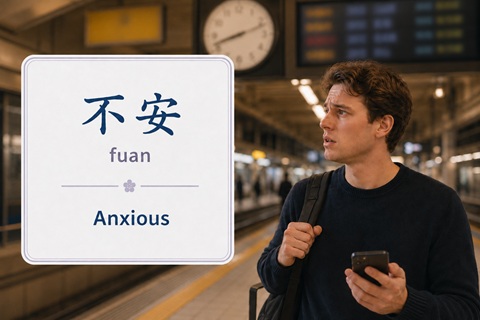
In Japanese, the word you choose for feeling worried, anxious, or nervous depends on the situation and the type of feeling you want to describe.
For example, 心配 (shinpai) is often used when you are worried about a specific person or situation, while 不安 (fuan) describes a more general feeling of anxiety or uncertainty. 緊張する (kinchou suru) is commonly used before an exam, presentation, interview, or other important event.
This guide introduces useful Japanese words for worry and nervousness with simple meanings, daily conversation examples, and examples for Japanese study and the JLPT.
What You Can Do with These Words
After learning these words, you will be able to talk about worry, anxiety, and nervousness more naturally in Japanese.
- Choose natural expressions for different situations, from everyday concerns to tests, presentations, and Japanese conversations.
- Understand the differences between shinpai, fuan, kinchou, dokidoki, and sowasowa.
Quick Phrases for Worry and Nervousness
Here are some useful phrases for talking about worry, anxiety, and nervousness in Japanese.
| Situation | Japanese | Meaning |
|---|---|---|
| Worried about someone | 母の体調が心配です(shinpai)。 | I am worried about my mother's health. |
| Feeling anxious | 新しい環境になじめるか、少し不安です(fuan)。 | I feel a little anxious about whether I can fit into my new environment. |
| Feeling nervous | 人前で話すと、緊張します(kinchou suru)。 | I get nervous when I speak in front of people. |
| Heart pounding | 試験が始まる前は、ドキドキします(dokidoki suru)。 | My heart pounds before an exam begins. |
| Waiting for your turn | 自分の番を待っている間、そわそわしていました(sowasowa suru)。 | I felt restless while waiting for my turn. |
心配 / shinpai: Worried or Concerned
心配 (shinpai) means “worry” or “concern.” Use it when you are worried about a person, an event, a result, or whether something will go well.
Useful for
family and health, plans, weather, travel, exams, results
Daily Conversation Examples
- 母の体調がよくないので、すごく心配です。
My mother is not feeling well, so I am very worried about her. - 明日は雨が降るそうですね。旅行の予定があるので、少し心配です。
It looks like it will rain tomorrow. We have travel plans, so I am a little worried.
Japanese Study & JLPT Examples
- JLPTまで、あと一週間しかありません。合格できるかな。少し心配です。
There is only one week left until the JLPT. I wonder if I can pass. I am a little worried. - 覚えなければならない漢字が、まだたくさんあります。試験までに間に合うか、心配です。
There are still many kanji I need to learn. I am worried that I may not finish in time for the exam.
Short Conversation
A: 明日のJLPT、準備はできましたか。
B: だいたいできました。でも、読解の問題で時間が足りなくなりそうで、心配です。
A: Are you ready for the JLPT tomorrow?
B: I think so, for the most part. But I am worried that I may run out of time on the reading section.
不安 / fuan: Anxious or Uneasy
不安 (fuan) means “anxiety,” “uneasiness,” or “feeling uncertain.” It is often used when you do not know what will happen or do not feel confident about the future.
Useful for
uncertain results, the future, new experiences, study progress, exams
Daily Conversation Examples
- 初めて一人で海外へ行きます。楽しみですが、少し不安もあります。
It is my first time traveling abroad alone. I am excited, but I also feel a little anxious. - 来週から新しい職場で働きます。うまくなじめるか、不安です。
I am starting a new job next week. I am anxious about whether I will fit in.
Japanese Study & JLPT Examples
- 日本語だけで会話を続けられるか、まだ少し不安です。
I still feel a little anxious about whether I can keep a conversation going entirely in Japanese. - 模擬試験ではリスニングの点数が低かったので、本番でもちゃんと聞き取れるか不安です。
My listening score was low on the practice test, so I am anxious about whether I will be able to understand it on the actual test.
Short Conversation
A: JLPTの勉強は順調ですか。
B: 文法はだいぶわかるようになりました。でも、模擬試験では点数があまりよくなかったので、本番のリスニングが少し不安です。
A: Is your JLPT study going well?
B: I understand grammar much better now. But my practice test score was not very good, so I am still a little anxious about the listening section on the actual test.
緊張する / kinchou suru: To Feel Nervous
緊張する (kinchou suru) means “to feel nervous” or “to feel tense.” It is commonly used before tests, presentations, interviews, performances, or other situations in which you feel pressure.
Useful for
tests, presentations, interviews, speaking in front of others, meeting new people
Daily Conversation Examples
- 人前で話すと、いつも緊張してしまいます。
I always get nervous when I speak in front of other people. - 知らない人ばかりの集まりは、少し緊張します。
I feel a little nervous at gatherings where I do not know anyone.
Japanese Study & JLPT Examples
- JLPTの試験会場に着いたら、急に緊張してきました。
I suddenly started to feel nervous when I arrived at the JLPT test center. - 日本語で発表するときは、今でも緊張します。
I still feel nervous when I give a presentation in Japanese.
Short Conversation
A: 今日の日本語のスピーチ、もうすぐですね。
B: はい。何度も練習しましたが、みんなの前で話すと思うと、やっぱり緊張します。
A: Your Japanese speech is coming up soon.
B: Yes. I have practiced many times, but just thinking about speaking in front of everyone still makes me nervous.
ドキドキする / dokidoki suru: Heart Pounding
ドキドキする (dokidoki suru) describes the feeling of your heart beating fast. It can be caused by nervousness, fear, excitement, or romantic feelings. You can also say 胸がドキドキする.
Useful for
nervous moments, excitement, surprises, waiting for results, speaking in front of others
Daily Conversation Examples
- 初めて会う人との待ち合わせは、少しドキドキします。
I feel a little nervous and excited when meeting someone for the first time. - 飛行機が急に大きく揺れて、しばらくドキドキが止まりませんでした。
The airplane suddenly shook badly, and my heart kept pounding for a while.
Japanese Study & JLPT Examples
- 試験が始まる直前は、すごくドキドキしました。
My heart was pounding just before the exam started. - JLPTの結果を見る直前は、合格しているか気になって、胸がドキドキしました。
Just before checking my JLPT result, my heart was pounding because I was wondering whether I had passed.
Short Conversation
A: JLPTの結果、もう見ましたか。
B: まだです。これから見るところなので、すごくドキドキしています。
A: Have you checked your JLPT result yet?
B: Not yet. I am about to check it, so my heart is pounding.
そわそわする / sowasowa suru: Restless or Unable to Settle Down
そわそわする (sowasowa suru) describes being unable to settle down because you are nervous, worried, excited, or waiting for something. It often suggests that the feeling can be seen in your behavior, such as repeatedly checking your phone, looking around, or moving restlessly.
Useful for
waiting for news or results, before an important event, expecting someone, nervousness, excitement
Daily Conversation Examples
- 面接の結果を待っている間、落ち着かなくて、ずっとそわそわしていました。
I could not relax and felt restless while waiting for the interview result. - 友達から返事が来ないので、スマホを何度も見ながらそわそわしています。
My friend has not replied, so I keep checking my phone and feeling restless.
Japanese Study & JLPT Examples
- JLPTの結果が発表される日は、朝からそわそわして、何度もサイトを確認しました。
On the day the JLPT results were released, I felt restless and checked the website many times. - 発表の順番が近づくにつれて、だんだんそわそわしてきました。
I became increasingly restless as my turn to present approached.
Short Conversation
A: さっきから何度もスマホを見ていますね。
B: 今日、面接の結果が届く予定なんです。気になって、そわそわしてしまって。
A: You have been checking your phone repeatedly.
B: I am supposed to receive my interview result today. I cannot stop thinking about it, so I feel restless.
Useful Differences: Which Word Should You Use?
心配 vs 不安
Use 心配 when you are concerned about a specific person, situation, or possible problem. 不安 describes an uneasy feeling caused by uncertainty or a lack of confidence.
Specific concern: 母の体調がよくないので、すごく心配です。
My mother is not feeling well, so I am very worried about her.
Uncertainty: 新しい職場にうまくなじめるか、不安です。
I feel anxious about whether I will fit in at my new workplace.
緊張する vs ドキドキする
緊張する describes the nervous or tense feeling itself. ドキドキする focuses on the physical feeling of your heart beating fast. It can also be caused by excitement, fear, or romantic feelings.
Feeling nervous: 発表の前は、いつも緊張します。
I always feel nervous before a presentation.
Heart pounding: 自分の番が近づいて、だんだんドキドキしてきました。
My heart started pounding more and more as my turn approached.
緊張する vs そわそわする
緊張する describes feeling nervous or tense. そわそわする describes being unable to settle down, often in a way that can be seen in your behavior.
Feeling nervous: 面接の前は緊張します。
I feel nervous before an interview.
Acting restless: 結果が気になって、スマホを何度も見ながらそわそわしています。
I keep checking my phone and feeling restless because I am waiting for the result.
Practice Talking About Feelings with Japonin Teachers
Words like 心配, 不安, 緊張する, and そわそわする become easier to understand when you practice them in real conversation.
Japonin offers live online Japanese lessons for learners who want to build confidence in speaking, listening, vocabulary, grammar, and natural communication.
You can also practice talking about your Japanese study, asking questions when you feel unsure, and preparing for the JLPT with experienced Japanese teachers.

Japanese Words for Worry and Nervousness: FAQ
Since 2006, Japonin has helped over 6,000 learners worldwide study Japanese online with support from our experienced Japanese language teachers.

Written by Chiho KamiokaFounder of Japonin
This guide explains five common Japanese expressions for worry, anxiety, nervousness, a pounding heart, and restlessness through natural examples from daily life, Japanese study, and the JLPT.
Ready to improve your Japanese?
Study Japanese with experienced teachers at Japonin.
Try two 50-minute live lessons and take the next step in your Japanese learning.
Explore Japanese Emotion Words
Explore more Japanese words for feelings and emotions, or see the complete guide to compare expressions for happiness, sadness, worry, anger, embarrassment, and more.
Japanese Emotion Words: Complete Guide
Compare common Japanese words for happiness, sadness, worry, anger, embarrassment, and other emotions in one guide.
Explore Japanese Emotion Words