

How to Say “Embarrassed” and “Awkward” in Japanese: Hazukashii, Kimazui, and More
Learn how to express embarrassment, awkwardness, self-consciousness, and discomfort in Japanese with examples based on real-life situations you may experience in Japan, using words and phrases like 恥ずかしい (hazukashii), 気まずい (kimazui), 照れくさい (terekusai), and 居心地が悪い (igokochi ga warui).
Written by Chiho Kamioka ·
What You Can Do with These Words
After learning these expressions, you will be able to talk more naturally about embarrassing, awkward, and unfamiliar moments you may experience in Japan.
- Describe an embarrassing or awkward moment caused by a mistake or misunderstanding in Japan.
- Respond naturally when someone compliments your Japanese or appearance.
- Explain how you felt in an unfamiliar cultural situation.
Quick Guide to Embarrassed and Awkward Moments in Japan
These examples show how the four expressions can be used in real-life situations you may experience in Japan.
| Situation | Japanese | Meaning |
|---|---|---|
| Music playing loudly on the Shinkansen | 新幹線でイヤホンが抜けて、音楽が大音量で流れてしまい、恥ずかしかったです(hazukashii)。 | My earphones came unplugged on the Shinkansen, and my music suddenly played loudly, which was embarrassing. |
| Running into a coworker at a convenience store | すっぴんでコンビニに行ったら、会社の同僚に会ってしまい、少し気まずかったです(kimazui)。 | I went to a convenience store without makeup and unexpectedly ran into a coworker, which felt a little awkward. |
| Being complimented while wearing a kimono | 京都で着物を着たとき、知らない人に「よく似合っていますね」と言われて、少し照れくさかったです(terekusai)。 | When I wore a kimono in Kyoto, a stranger told me it looked good on me, and I felt a little bashful. |
| Feeling out of place in a Harajuku shop | 原宿で若者向けのショップに入ってしまい、少し居心地が悪かったです(igokochi ga warui)。 | I went into a shop aimed at younger people in Harajuku and felt a little out of place. |
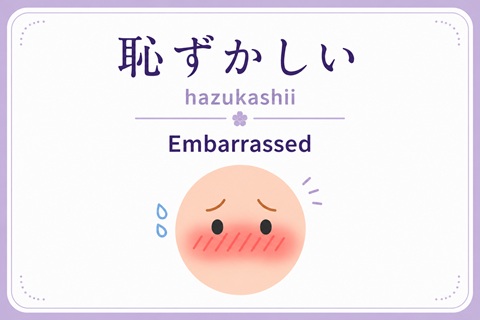
恥ずかしい / hazukashii: Embarrassed or Ashamed
恥ずかしい (hazukashii) usually means “embarrassed” or “ashamed” and can sometimes convey feeling shy or self-conscious. It is used when you feel embarrassed by a mistake, your behavior or appearance, or attention from other people.
Common situations
making mistakes, saying something incorrectly, being the center of attention, feeling self-conscious about your appearance, and speaking in front of others
Natural Examples
- コンビニで店員さんの質問を聞き間違えて、違う返事をしてしまい、少し恥ずかしかったです。
I misheard the clerk’s question at a convenience store and gave the wrong answer, so I felt a little embarrassed. - 東京タワーを東京スカイツリーと言い間違えて、少し恥ずかしかったです。
I accidentally called Tokyo Tower “Tokyo Skytree” and felt a little embarrassed.
Short Conversation
A: 新幹線はどうでしたか。
B: 快適でした。でも、途中でイヤホンが抜けて、音楽が大音量で流れてしまったんです。
A: それはびっくりしますね。
B: はい。みんなに見られて、とても恥ずかしかったです。
A: How was the Shinkansen?
B: It was comfortable, but my earphones came unplugged, and my music suddenly played loudly.
A: That must have been surprising.
B: Yes. Everyone looked at me, and I felt very embarrassed.
気まずい / kimazui: Awkward or Socially Uncomfortable
気まずい (kimazui) means “awkward” or “socially uncomfortable.” It is used when there is tension between people or when you do not know how to act after an unexpected encounter, misunderstanding, mistake, or silence.
Common situations
unexpectedly running into someone, making a social mistake, uncomfortable silence, misunderstandings, and not knowing how to respond
Natural Examples
- 会社のエレベーターで、あまり話したことのない同僚と二人きりになり、何を話せばいいかわからず、少し気まずかったです。
I was alone in an elevator with a coworker I had hardly spoken to, and I did not know what to say, so it felt a little awkward. - 京都のお土産店で試食をしたあと、何も買わずに店を出るのが少し気まずかったです。
After trying a sample at a souvenir shop in Kyoto, I felt a little awkward leaving without buying anything.
Short Conversation
A: すっぴんでコンビニに行ったら、会社の同僚に会ってしまったんです。
B: それはちょっと気まずいですね。
A: はい。まさか会うとは思いませんでした。
A: I went to a convenience store without makeup and unexpectedly ran into a coworker.
B: That must have been a little awkward.
A: Yes. I never expected to run into them.
照れくさい / terekusai: Bashful or Self-Conscious
照れくさい (terekusai) describes a softer, often positive kind of embarrassment. It is used when praise, compliments, or positive attention make you feel pleased but slightly shy or self-conscious.
Common situations
receiving compliments, being praised or thanked, being applauded, talking about personal feelings, and receiving positive attention
Natural Examples
- 日本語で注文したら、店員さんに「日本語がお上手ですね」と言われて、少し照れくさかったです。
When I ordered in Japanese, the server complimented my Japanese, and I felt a little bashful. - 京都で着物を着たとき、知らない人に「よく似合っていますね」と言われて、少し照れくさかったです。
When I wore a kimono in Kyoto, a stranger told me it looked good on me, and I felt a little bashful.
Short Conversation
A: さっきの歌、すごく上手でしたよ。
B: いやいや、そんなことないです。
A: みんな拍手していましたね。
B: はい。少し照れくさかったですが、うれしかったです。
A: You sang really well just now.
B: No, not at all.
A: Everyone was applauding.
B: Yes. I felt a little bashful, but I was happy.
居心地が悪い / igokochi ga warui: To Feel Uncomfortable or Out of Place
居心地が悪い (igokochi ga warui) means that you do not feel relaxed or comfortable in a particular place, group, or atmosphere. It is often used when you feel that you do not fit in or cannot fully relax.
Common situations
being in an unfamiliar group, entering a place that does not feel suited to you, being unable to join a conversation, and feeling out of place
Natural Examples
- 原宿で若者向けのショップに入ってしまい、少し居心地が悪かったです。
I went into a shop aimed at younger people in Harajuku and felt a little out of place. - 食事会に参加しましたが、知らない人ばかりだったので、最初は少し居心地が悪かったです。
I attended a dinner gathering, but I did not know anyone there, so I felt a little out of place at first.
Short Conversation
A: 昨日の居酒屋はどうでしたか。
B: 小さなお店で、周りは常連客ばかりだったので、最初は少し居心地が悪かったです。
A: そうだったんですね。
B: はい。でも、店員さんが話しかけてくれて、だんだんリラックスできました。
A: How was the izakaya you went to yesterday?
B: It was a small place, and everyone around me seemed to be a regular, so I felt a little out of place at first.
A: I see.
B: Yes. But one of the staff members started talking to me, and I gradually began to relax.
Useful Differences: Which Expression Should You Use?
恥ずかしい vs 照れくさい
恥ずかしい is a broad word for embarrassment and may be caused by a mistake, failure, or unwanted attention. 照れくさい is softer and is often caused by praise or positive attention.
A mistake: コンビニで店員さんの質問を聞き間違えて、違う返事をしてしまい、恥ずかしかったです。
I misheard the clerk’s question at a convenience store and gave the wrong answer, so I felt embarrassed.
Positive attention: 日本語で注文したら、店員さんに「日本語がお上手ですね」と言われて、少し照れくさかったです。
When I ordered in Japanese, the server complimented my Japanese, and I felt a little bashful.
気まずい vs 居心地が悪い
気まずい usually describes a specific awkward interaction between people. 居心地が悪い describes not feeling relaxed or comfortable in the overall place, group, or atmosphere.
An awkward interaction: すっぴんでコンビニに行ったら、会社の同僚に会ってしまい、少し気まずかったです。
I went to a convenience store without makeup and unexpectedly ran into a coworker, which felt a little awkward.
Feeling out of place in a group: 食事会に参加しましたが、知らない人ばかりだったので、最初は少し居心地が悪かったです。
I attended a dinner gathering, but I did not know anyone there, so I felt a little out of place at first.
Practice Talking About Experiences in Japan with Japonin Teachers
Words like 恥ずかしい, 気まずい, 照れくさい, and 居心地が悪い become easier to understand when you connect them with situations you may actually experience in Japan.
In live online lessons, you can practice explaining mistakes while shopping or using transportation, responding to compliments, and talking about unfamiliar customs more naturally in Japanese.

Japanese Words for Embarrassment and Awkwardness: FAQ
Since 2006, Japonin has helped over 6,000 learners worldwide study Japanese online with support from our experienced Japanese language teachers.

Written by Chiho KamiokaFounder of Japonin
This guide explains four common Japanese expressions for embarrassment, social awkwardness, self-consciousness, and feeling out of place through real-life experiences you may have in Japan.
Ready to improve your Japanese?
Study Japanese with experienced teachers at Japonin.
Try two 50-minute live lessons and take the next step in your Japanese learning.
Explore Japanese Emotion Words
Explore more Japanese words for feelings and emotions, or see the complete guide to compare expressions for happiness, sadness, worry, anger, embarrassment, and more.
Japanese Emotion Words: Complete Guide
Compare common Japanese words for happiness, sadness, worry, anger, embarrassment, and other emotions in one guide.
Explore Japanese Emotion Words