

Angry in Japanese: Okoru, Iraira, Mukatsuku, and More
Learn how to choose Japanese words for anger, annoyance, and frustration based on the cause, strength, and tone, with natural examples using 怒る (okoru), 腹が立つ (hara ga tatsu), イライラする (iraira suru), むかつく (mukatsuku), and 悔しい (kuyashii).
Written by Chiho Kamioka ·
Japanese has several common words for anger, annoyance, and frustration, but each has a different nuance. The best expression depends on the cause, the situation, and how strong you want to sound.
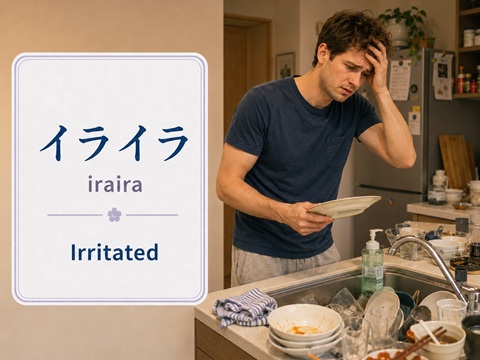
For example, 怒る (okoru) can describe becoming angry or scolding someone. 腹が立つ (hara ga tatsu) focuses on the anger you feel inside, while イライラする (iraira suru) describes feeling irritated, frustrated, or restless because of a person or situation.
What You Can Do With These Words
By the end of this guide, you will be able to:
- Choose a natural Japanese expression based on what caused the anger, annoyance, or frustration.
- Understand how these expressions sound in conversations between partners.
- Recognize which expressions sound neutral, casual, strong, or rough.
Which Word Should You Use?
The best word depends on what caused the feeling and how strongly you want to express it. Use this table as a quick guide.
| Japanese | When to Use It | Main Nuance | Tone |
|---|---|---|---|
| 怒る okoru |
When someone becomes angry, shows anger, or scolds another person | General anger or scolding | Basic and common |
| 腹が立つ hara ga tatsu |
When someone’s words, attitude, or behavior make you feel angry | The anger you feel inside | Direct and conversational |
| イライラする iraira suru |
When delays, stress, noise, or repeated problems make you irritated or impatient | Ongoing irritation, impatience, or restlessness | Common in conversation |
| むかつく mukatsuku |
When someone’s words, attitude, or behavior strongly annoy you | Strong and personal annoyance or anger | Casual and rough |
| 悔しい kuyashii |
When you lose, fail, perform poorly, or narrowly miss a goal | Frustration or disappointment about a result | Natural in many situations |
悔しい describes frustration about a result rather than anger itself.
怒る / okoru: To Get Angry
怒る (okoru) is the basic Japanese verb meaning “to get angry” or “to become angry.” Depending on the sentence, it can also mean that someone angrily scolds another person.
Useful for
arguments, broken promises, rule-breaking, mistakes, parents, teachers, and other people who may scold someone
Natural Examples
- 約束をすっぽかしたら、彼女をマジで怒らせちゃった。
I stood her up and made her really angry. - 弟がまた朝帰りして、親父にめちゃくちゃ怒られてたよ。
My younger brother stayed out all night again and got seriously scolded by my dad. - そんなに怒らないで。ちゃんと理由を話すから。
Don’t be so angry. I’ll explain what happened.
Short Conversation (Between Partners)
A: 昨日、なんで連絡しなかったの?
B: ごめん。友達と話していて、遅くなっちゃった。
A: ずっと心配してたんだよ。何度も電話したのに。正直、かなり怒ってる。
B: 本当にごめん。次からは、遅くなるときは必ず連絡する。
A: Why didn’t you contact me yesterday?
B: Sorry. I was talking with a friend and ended up staying out late.
A: I was worried about you the whole time. I called you several times. Honestly, I’m pretty angry.
B: I’m really sorry. From now on, I’ll always contact you if I’m going to be late.
腹が立つ / hara ga tatsu: To Feel Angry
腹が立つ (hara ga tatsu) means “to feel angry” or “to feel annoyed.” Unlike 怒る, which may describe visible anger or scolding, this expression focuses on the angry feeling inside you.
Useful for
rude behavior, broken promises, unfair treatment, lies, insults, and thoughtless comments
Natural Examples
- 何度も約束を破られて、本当に腹が立った。
They broke their promise again and again, and it made me really angry. - あんな失礼なことを言われたら、誰だって腹が立つよ。
Anyone would get angry if someone said something that rude.
Short Conversation (Between Partners)
A: なんで約束を忘れたの? 本当に腹が立つ。
B: ごめん。わざとじゃないんだ。
A: そうやって言い訳されると、余計に腹が立つんだけど。
B: 本当にごめん。次からは絶対に忘れないから。
A: Why did you forget about our plans? I’m really angry.
B: I’m sorry. I didn’t do it on purpose.
A: Making excuses like that just makes me even angrier.
B: I’m really sorry. I promise I won’t forget again.
What Is the Difference Between 怒る and 腹が立つ?
怒る (okoru) is a general word for becoming angry or expressing anger. Depending on the situation, it can also mean scolding someone.
腹が立つ (hara ga tatsu) focuses more on the anger you feel inside because of someone’s words, actions, or attitude.
Both expressions can sometimes be used in the same situation. The difference is mainly in focus: 怒る often describes becoming angry or expressing anger, while 腹が立つ emphasizes the anger you feel inside.
イライラする / iraira suru: To Feel Irritated or Frustrated
イライラする (iraira suru) describes irritation, impatience, or frustration that continues or gradually builds. It is often used when something takes too long, keeps going wrong, or does not move as smoothly as expected.
Useful for
waiting, delays, repeated mistakes, slow progress, computer problems, noise, and unclear communication
Natural Examples
- 飛行機が10時間も遅れるって! あの航空会社、いつも遅れるんだよね。イライラするなあ。
They say the flight will be delayed by ten hours! Their flights are always delayed. It is so frustrating. - サポートに電話してるんだけど、もう10分も待たされてる。イライラする。
I’m trying to call customer support, but I’ve already been on hold for ten minutes. It’s so frustrating.
Short Conversation (Between Partners)
A: 今日、どこに行きたい?
B: どこでもいいよ。
A: さっきからそればっかりだよ。何を聞いても「どこでもいい」って言われると、だんだんイライラしてくる。
B: ごめん。じゃあ、新しくできたカフェに行かない?
A: Where do you want to go today?
B: Anywhere is fine.
A: That’s all you’ve been saying. When every answer is “anywhere is fine,” I gradually start to get irritated.
B: Sorry. Then how about going to the new café?
むかつく / mukatsuku: To Be Really Annoyed
むかつく (mukatsuku) is a casual expression meaning “to be really annoyed,” “to be irritated,” or “to be angry.” It is often used as a strong reaction to someone’s words, attitude, or behavior.
Useful for
rude comments, an annoying attitude, unfair behavior, being ignored, and other situations that cause a strong personal reaction. むかつく is common among friends, but it can sound rough or rude, so avoid using it directly to a manager, teacher, customer, or someone you do not know well.
Natural Examples
- あの人の言い方、本当にむかつく。
The way that person speaks really annoys me. - 人の失敗を笑うなんて、マジでむかつく。
It really annoys me when someone laughs at another person’s mistake. - 何度メッセージを送っても無視されると、さすがにむかつく。
It really annoys me when someone ignores my messages over and over.
Short Conversation (Between Partners)
A: さっきからスマホばっかり見て、私の話聞いてないでしょ。本当にむかつく。
B: ごめん。ちょっとSNSをチェックしてただけだよ。
A: せっかくのデートなのに、その態度がマジでむかつく。
B: わかった。スマホはしまうよ。さっきの話、もう一度ゆっくり聞かせて。
A: You've been looking at your phone this whole time and not listening to me. It's really annoying.
B: Sorry. I was just checking social media for a moment.
A: We are supposed to be on a date. That attitude really pisses me off.
B: Alright. I'll put my phone away. Tell me what you were saying again, and I'll listen properly this time.
悔しい / kuyashii: Frustrated After Losing or Failing
悔しい (kuyashii) describes the frustration or disappointment you feel after losing, failing, being unable to perform as well as you wanted, or narrowly missing a goal.
Useful for
losing, failing, missing an opportunity, poor performance, unfair results, and being close to success
Natural Examples
- 一生懸命準備したのに、プレゼンがうまくできなくて、本当に悔しかった。
I prepared really hard, but the presentation did not go well. I was so frustrated with myself. - あと少しだったのに、最終面接で落ちてしまって、すごく悔しいです。
I came so close, but I did not get the job after the final interview. I am really disappointed and frustrated.
Short Conversation (Between Partners)
A: またボウリングで負けた! 今度こそ勝てると思ったのに、悔しい。
B: でも、前よりずっと上手になったよ。
A: 次のデートでもう一回勝負しよう。今度は絶対に勝つから。
B: いいよ。じゃあ、負けたほうが夕飯をおごることにしよう。
A: I lost at bowling again! I thought I could win this time. It’s so frustrating.
B: But you’ve gotten much better than before.
A: Let’s have another match on our next date. I’m definitely going to win next time.
B: Sure. Then the loser has to pay for dinner.
悔しい is not a direct word for anger, but it is often translated as “frustrated” in English.
Practice Choosing Natural Japanese Words with Japonin Teachers
Words such as 怒る, 腹が立つ, イライラする, むかつく, and 悔しい become easier to understand when you compare them in realistic situations.
In live online lessons, you can practice choosing words that match the cause and strength of your feelings, while also learning how to adjust your language for friends, teachers, coworkers, and people you do not know well.

Japanese Words for Anger and Frustration: FAQ
Since 2006, Japonin has helped over 6,000 learners worldwide study Japanese online with support from our experienced Japanese language teachers.

Written by Chiho KamiokaFounder of Japonin
This guide explains five common Japanese expressions for anger, annoyance, and frustration through natural examples, conversations between partners, and clear comparisons of their meanings and nuances.
Ready to improve your Japanese?
Study Japanese with experienced teachers at Japonin.
Try two 50-minute live lessons and take the next step in your Japanese learning.
Explore Japanese Emotion Words
Explore more Japanese words for feelings and emotions, or see the complete guide to compare expressions for happiness, sadness, worry, anger, embarrassment, and more.
Japanese Emotion Words: Complete Guide
Compare common Japanese words for happiness, sadness, worry, anger, embarrassment, and other emotions in one guide.
Explore Japanese Emotion Words