

Sad in Japanese: Kanashii, Sabishii, Tsurai, Setsunai, and More
Learn how to say sad in Japanese with words like 悲しい (kanashii), 寂しい / さみしい (sabishii / samishii), つらい (tsurai), 切ない (setsunai), 苦しい (kurushii), and 残念 (zannen) with examples for daily conversation and anime.
Written by Chiho Kamioka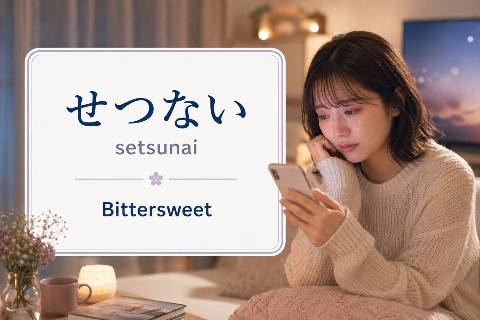
Japanese has several useful words for sad feelings, and each word has a slightly different nuance.
For example, 悲しい (kanashii) is the basic word for “sad,” while 寂しい / さみしい (sabishii / samishii) is used when you feel lonely or miss someone. 切ない (setsunai) describes a bittersweet or heart-aching feeling.
This guide introduces useful Japanese sad words with simple meanings, daily conversation examples, and examples for talking about emotional scenes in anime.
What You Can Do with These Words
After learning these words, you will be able to express sad feelings more naturally in Japanese.
- Say that you feel sad, lonely, or disappointed.
- Talk about emotional scenes in anime.
- Explain the difference between kanashii, sabishii, tsurai, and setsunai.
Quick Sad Phrases and Meanings
Here are some quick phrases you can use to talk about sad feelings in Japanese.
| Situation | Japanese | Meaning |
|---|---|---|
| Sad news | 悲しい(kanashii)お知らせがあります。 | I have some sad news. |
| Missing someone | なかなか家族に会えなくて、さみしいです(samishii)。 | I miss my family because I cannot see them very often. |
| Having a hard time | 最近はつらい(tsurai)ことが多くて、ちょっと大変です。 | Lately, things have been a bit tough. |
| Bittersweet story | このお話は、すごく切ない(setsunai)ですね。 | This story feels very bittersweet, doesn't it? |
| Emotional pain | なんだか、すごく胸が苦しいです(mune ga kurushii)。 | Somehow, my heart feels really heavy. |
| Disappointment | 試験に落ちてしまって、すごく残念です(zannen)。 | I failed the exam, and I am really disappointed. |
悲しい / kanashii: Sad
悲しい (kanashii) is the basic Japanese word for “sad.” Use it when something sad happens, when you hear sad news, or when a story makes you feel sad.
Useful for
bad news, sad stories, someone’s feelings
Daily Conversation Examples
- ちょっと悲しいお知らせがあります。
I have some sad news. - 友だちが遠くに引っ越しちゃうので、すごく悲しいです。
I am really sad because my friend is moving far away.
Talking About Anime
- このシーン、何度見ても本当に悲しいですね。
This scene is really sad, no matter how many times I watch it. - このアニメは悲しい話ですが、すごく心に響きます。
This anime is a sad story, but it really touches your heart.
Short Conversation
A: 最近ペットの体調がよくなくて、見ているだけで悲しいです。
B: そうなんですね。大切な家族ですから、早く元気になるといいですね。
A: My pet has not been feeling well lately, and just watching them makes me sad.
B: I see. They are an important part of your family, so I hope they get better soon.
寂しい・さみしい / sabishii, samishii: Lonely or Missing Someone
寂しい and さみしい both mean “lonely” or “to miss someone.” Use them when you feel alone, when someone is not there, or when a place feels quiet and empty.
You may see both sabishii and samishii. Sabishii is commonly used as the dictionary-style reading, while samishii is also very natural in everyday conversation.
Useful for
being alone, missing family or friends, quiet places, farewell scenes
Daily Conversation Examples
- 一人でいると、なんだか寂しいです。
I feel kind of lonely when I am by myself. - なかなか家族に会えなくて、さみしいです。
I miss my family because I cannot see them very often.
Talking About Anime
- 主人公は、いつもどこか寂しそうです。
The main character always looks somewhat lonely. - 別れのシーンを見て、すごくさみしくなりました。
The farewell scene made me feel very lonely.
Short Conversation
A: 日本の生活には、もう慣れましたか。
B: はい、だいぶ慣れました。でも、たまに家族に会いたくなって、少しさみしくなります。
A: Have you gotten used to life in Japan yet?
B: Yes, I have gotten used to it quite a bit. But sometimes I miss my family and feel a little lonely.
つらい / tsurai: Hard, Painful, or Tough
つらい (tsurai) means “hard,” “painful,” or “tough.” It can describe emotional pain, a difficult situation, or physical hardship.
Useful for
hard days, emotional pain, difficult work, studying, heartbreak, painful scenes
Daily Conversation Examples
- 最近はつらいことが多くて、ちょっと大変です。
Things have been a bit tough lately. - 腰が痛くて、かなりつらいです。
My lower back hurts, and it is really painful.
Talking About Anime
- このシーンは、見ていて本当につらいですね。
This scene is really painful to watch. - 主人公の過去がつらすぎます。
The main character’s past is just too painful.
Short Conversation
A: 今日、ちょっとつらそうですね。大丈夫ですか。
B: はい、腰が痛くて、座っているのも少しつらいです。
A: You look like you are having a hard time today. Are you okay?
B: Yes, my lower back hurts, and even sitting is a little painful.
切ない / setsunai: Bittersweet or Heart-Aching
切ない (setsunai) describes a sad, bittersweet, or heart-aching feeling. It is often used when something is beautiful but painful, or when you feel sadness, love, longing, and helplessness at the same time.
Useful for
love stories, farewell scenes, memories, and emotional scenes in anime
Daily Conversation Examples
- 昔の写真を見ると、なんだか切ない気持ちになります。
Just looking at old photos makes me feel a bit bittersweet. - この曲を聴いていると、ちょっと切なくなってきます。
When I listen to this song, I start to feel a little bittersweet.
Talking About Anime
- このアニメは、ストーリーが本当に切ないですね。
The story of this anime is really bittersweet. - 二人の関係が切なすぎて、思わず泣きそうになりました。
Their relationship was so heartbreaking that I almost cried without realizing it.
Short Conversation
A: この前おすすめしたアニメ、どうだった?
B: すごく切なかった。最後のシーンは本当に泣きそうになっちゃった。
A: How did you like the anime I recommended the other day?
B: It was so bittersweet. I almost cried at the final scene.
苦しい / kurushii: Painful or Difficult
苦しい (kurushii) means “painful,” “hard,” or “difficult.” It can describe physical pain, emotional pain, or a situation that feels heavy and difficult to bear.
Useful for
emotional pain, physical pain, pressure, difficult situations, heavy feelings
Daily Conversation Examples
- 将来のことを考えると不安になって、胸が苦しくなります。
When I think about the future, I feel anxious and my heart feels heavy. - 本当の気持ちを伝えられなくて、すごく苦しいです。
It is so painful because I cannot express my true feelings.
Talking About Anime
- このシーンは、見ていて胸が苦しくなります。
Watching this scene makes my heart ache. - 本当の気持ちを言えない主人公を見ていると、こちらまで苦しくなります。
Watching the main character unable to say how they really feel makes my heart ache too.
A: 地震のニュースを見ましたか。
B: はい。被害の様子を見て、胸が苦しくなりました。
A: Did you see the news about the earthquake?
B: Yes. Seeing the damage made my heart feel heavy.
残念 / zannen: Disappointing or Too Bad
残念 (zannen) means “disappointing,” “unfortunate,” or “too bad.” It is useful when something does not go as you hoped.
Useful for
failed plans, bad results, missed chances, disappointing endings
Daily Conversation Examples
- 雨でイベントが中止になってしまって、すごく残念です。
The event was canceled because of the rain, so I am really disappointed. - せっかくのチャンスだったのに、会えなくて残念です。
It is a shame that we could not meet, especially since it was such a good opportunity.
Talking About Anime
- あの作品は、最後の展開がちょっと残念でした。
The final plot development of that series was a little disappointing. - あのキャラクターが、もうアニメに登場しなくなってしまって残念です。
I am disappointed that the character does not appear in the anime anymore.
Short Conversation
A: 楽しみにしていたイベントが、雨で中止になってしまいました。
B: それは残念でしたね。また次の機会があるといいですね。
A: The event I was looking forward to was canceled because of the rain.
B: That is too bad. I hope there will be another chance next time.
Useful Differences: Which Word Should You Use?
悲しい vs 寂しい
Use 悲しい for general sadness caused by an event, news, or story. Use 寂しい or さみしい when you feel lonely or miss someone.
Sad: ちょっと悲しいお知らせがあります。
I have some sad news.
Lonely: なかなか家族に会えなくて、さみしいです。
I miss my family because I cannot see them very often.
つらい vs 苦しい
つらい describes a hard, painful, or tough situation. 苦しい feels heavier and can describe physical pain, emotional pain, or a feeling that is hard to bear.
Hard: 腰が痛くて、かなりつらいです。
My lower back hurts, and it is really painful.
Heavy feeling: 将来のことを考えると不安になって、胸が苦しくなります。
When I think about the future, I feel anxious and my heart feels heavy.
悲しい vs 切ない
悲しい is straightforward sadness. 切ない is a bittersweet, helpless, or heart-aching feeling, often related to love, memories, or longing.
Sad: その話を聞いて、悲しくなりました。
Hearing that story made me feel sad.
Bittersweet: 昔好きだった人のことを思い出すと、なんだか切ない気持ちになります。
When I remember someone I used to like, I feel kind of bittersweet.
Practice Japanese Feelings with Japonin Teachers
Words like 悲しい, 寂しい, つらい, and 切ない become easier to understand when you practice them in real conversation.
Japonin offers live online Japanese lessons for learners who want to build confidence in speaking, listening, vocabulary, and natural communication.
If you enjoy anime, you can also practice how to talk about stories, characters, feelings, and memorable scenes in Japanese.

Japanese Sad Words FAQ
Since 2006, Japonin has helped over 6,000 learners worldwide study Japanese online with support from our experienced Japanese language teachers.

Written by Chiho Kamioka Founder of Japonin
This guide helps learners understand common Japanese sad words through simple meanings, daily conversation examples, and examples for talking about emotional scenes in anime.
Ready to improve your Japanese?
Study Japanese with experienced teachers at Japonin.
Try two 50-minute live lessons and take the next step in your Japanese learning.
Explore Japanese Emotion Words
Explore more Japanese words for feelings and emotions, or see the complete guide to compare expressions for happiness, sadness, worry, anger, embarrassment, and more.
Japanese Emotion Words: Complete Guide
Compare common Japanese words for happiness, sadness, worry, anger, embarrassment, and other emotions in one guide.
Explore Japanese Emotion Words