

Happy in Japanese: Ureshii, Tanoshii, Wakuwaku, and More
Learn useful Japanese happy words such as うれしい (ureshii), 楽しい (tanoshii), 安心する (anshin suru), ほっとする (hotto suru), わくわくする (wakuwaku suru), and 満足する (manzoku suru) with examples for travel, daily conversation, and JLPT study.
Written by Chiho Kamioka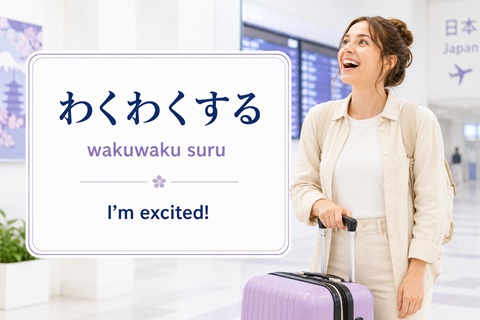
When you travel in Japan or talk with Japanese people, you may want to say more than just “good” or “nice.” You may want to say that you are happy, relieved, excited, or satisfied.
In Japanese, different happy words are used in different situations. For example, うれしい (ureshii) is used when something good happens to you, while 楽しい (tanoshii) is used when an experience is fun or enjoyable.
This guide introduces six useful Japanese happy words and shows how to use each one in travel situations and daily conversation. You will also see short conversation examples and JLPT study notes.
What You Can Do with These Words
After learning these words, you will be able to express positive feelings in simple Japanese.
- Talk about a fun trip, lesson, or event.
- Say you feel relieved after making a reservation or solving a problem.
- Express excitement before a trip or satisfaction with a hotel, restaurant, lesson, or service.
Quick Travel Phrases and Meanings
Here are some quick examples you can use when traveling in Japan. Each phrase uses one of the happy words introduced in this guide.
| Situation | Japanese | Meaning |
|---|---|---|
| Meeting someone again | また会えて、うれしい(ureshii)です。 | I am happy to see you again. |
| Enjoying a trip | 旅行はとても楽しい(tanoshii)です。 | The trip is a lot of fun. |
| Making a reservation | 予約ができて、安心しました(anshin suru)。 | I felt relieved because I could make a reservation. |
| Catching a train | 電車に間に合って、ほっとしました(hotto suru)。 | I felt relieved because I made it to the train. |
| Before traveling | 日本旅行が楽しみで、わくわくしています(wakuwaku suru)。 | I am excited about my trip to Japan. |
| At a hotel | このホテルにとても満足しています(manzoku suru)。 | I am very satisfied with this hotel. |
うれしい / ureshii: Happy or Glad
うれしい (ureshii) means “happy” or “glad.” Use it when something good happens to you.
Useful for
good news, meeting someone again, passing a test, receiving a kind message
Travel Examples
- また日本で会えて、うれしいです。
I am happy to see you again in Japan. - 友だちと一緒に旅行できて、うれしかったです。
I was happy that I could travel with my friend.
Daily Conversation Examples
- プレゼントをもらって、うれしいです。
I am happy because I received a present. - JLPT N5に合格できて、うれしいです。
I am happy that I passed the JLPT N5.
Travel Conversation
A: 日本でまた会えましたね。
B: はい。とてもうれしいです。
A: We were able to meet again in Japan.
B: Yes. I am very happy.
楽しい / tanoshii: Fun or Enjoyable
楽しい (tanoshii) means “fun” or “enjoyable.” Use it when an activity, trip, lesson, event, or conversation is enjoyable.
Useful for
travel, lessons, events, parties, conversations, activities
Travel Examples
- 友だちと東京を歩くのは楽しいです。
Walking around Tokyo with my friend is fun. - 京都旅行はとても楽しかったです。
The trip to Kyoto was a lot of fun.
Daily Conversation Examples
- 日本語で話すのは楽しいです。
Speaking in Japanese is enjoyable. - 今日のレッスンはとても楽しかったです。
Today’s lesson was a lot of fun.
Travel Conversation
A: 京都はどうでしたか。
B: とても楽しかったです。お寺がきれいでした。
A: How was Kyoto?
B: It was a lot of fun. The temples were beautiful.
安心する / anshin suru: To Feel Reassured
安心する (anshin suru) means “to feel relieved” or “to feel reassured.” Use it when you were worried before, but now you feel safe or calm because the situation is okay.
Useful for
reservations, schedules, emails, safety, travel plans, lesson arrangements
Travel Examples
- ホテルの予約ができて、安心しました。
I felt relieved once I was able to make a reservation. - 新幹線のチケットが取れて、安心しました。
I felt relieved after I got a Shinkansen ticket.
Daily Conversation Examples
- メールをもらって、安心しました。
I felt relieved after receiving your email. - 家族が無事で、安心しました。
I felt relieved that my family was safe.
Travel Conversation
A: ホテルの予約はできましたか。
B: はい、できました。安心しました。
A: Were you able to make a hotel reservation?
B: Yes, I was. I felt relieved.
ほっとする / hotto suru: To Feel Relieved
ほっとする (hotto suru) also means “to feel relieved,” but it often sounds more emotional and conversational than 安心する. It is the feeling of tension leaving your body or mind.
Useful for
after catching a train, after an exam, after solving a problem, after something stressful ends
Travel Examples
- 荷物が見つかって、ほっとしました。
I felt relieved because I found my luggage. - 無事にホテルに着いて、ほっとしました。
I felt relieved because I arrived safely at the hotel.
Daily Conversation Examples
- 問題が解決して、ほっとしています。
I feel relieved because the problem has been solved. - 試験が終わって、ほっとしました。
I felt relieved after the exam ended.
Travel Conversation
A: 新幹線に間に合いましたか。
B: はい。ぎりぎり間に合って、ほっとしました。
A: Did you make it to the Shinkansen?
B: Yes. I barely made it, so I felt relieved.
わくわくする / wakuwaku suru: To Feel Excited
わくわくする (wakuwaku suru) means “to feel excited” in a positive way. Use it when you are looking forward to something enjoyable, such as a trip, event, lesson, or new experience.
Useful for
before a trip, before an event, before a concert, before a new lesson
Travel Examples
- 日本旅行の前は、いつもわくわくします。
I always feel excited before traveling to Japan. - 明日、大阪へ行くので、わくわくしています。
I’m excited because I’m going to Osaka tomorrow.
Daily Conversation Examples
- 明日のイベントが楽しみで、わくわくしています。
I’m excited about tomorrow’s event. - 新しいプロジェクトが始まるので、わくわくしています。
I’m excited because a new project is starting.
Travel Conversation
A: 来週、日本へ行くんですね。
B: はい。とてもわくわくしています。
A: You are going to Japan next week, right?
B: Yes. I am very excited.
満足する / manzoku suru: To Feel Satisfied
満足する (manzoku suru) means “to feel satisfied.” Use it when something meets your expectations and you feel pleased with it.
Useful for
hotels, restaurants, services, travel plans, products, apps
Travel Examples
- このホテルのサービスにとても満足しています。
I’m very satisfied with the service at this hotel. - 旅行のプランにとても満足しています。
I’m very satisfied with the travel plan.
Service / Product Examples
- スタッフの対応にとても満足しています。
I’m very satisfied with the staff’s support. - このアプリの使いやすさにとても満足しています。
I’m very satisfied with how easy this app is to use.
Travel Conversation
A: ホテルはどうですか。
B: とてもきれいです。すごく満足しています。
A: How is the hotel?
B: It’s very clean. I’m really satisfied with it.
Useful Differences: Which Word Should You Use?
うれしい vs 楽しい
Use うれしい when something good happens to you. Use 楽しい when an experience is fun.
Good news: JLPTに合格して、うれしいです。
I am happy because I passed the JLPT.
Fun experience: 旅行は楽しいです。
Traveling is fun.
安心する vs ほっとする
安心する sounds a little more neutral and means “to feel reassured.” ほっとする sounds more emotional and conversational.
Reassured: 予約ができて、安心しました。
I felt reassured because I could make a reservation.
Relieved after tension: 電車に間に合って、ほっとしました。
I felt relieved because I made it to the train.
Are These Words Useful for the JLPT?
Yes. These words are useful not only for travel and daily conversation, but also for JLPT study. Basic words such as うれしい and 楽しい are important for beginner learners, while words such as 安心する, ほっとする, and 満足する help you express feelings more naturally as your Japanese improves.
For JLPT learners, it is helpful to remember not only the English meaning, but also the situation: good news, a fun experience, relief after worry, excitement before an event, or satisfaction with a result.
Quick Review: Six Japanese Happy Words
| Japanese | Romaji | Meaning | Best Situation |
|---|---|---|---|
| うれしい | ureshii | happy, glad | when something good happens to you |
| 楽しい | tanoshii | fun, enjoyable | when an experience is enjoyable |
| 安心する | anshin suru | to feel reassured | when your worry goes away because the situation is okay |
| ほっとする | hotto suru | to feel relieved | after stress, tension, or worry ends |
| わくわくする | wakuwaku suru | to feel excited | when you are looking forward to something |
| 満足する | manzoku suru | to feel satisfied | when something meets your expectations |
Practice Japanese with Japonin Teachers
Words like うれしい, 楽しい, 安心しました, and ほっとしました become easier to use when you practice them in real conversation.
Japonin offers live online Japanese lessons for learners who want to build confidence in speaking, listening, vocabulary, and everyday communication.
If you are learning Japanese for travel, you may also like our Survival Japanese course , where you can practice useful expressions for transportation, shopping, restaurants, hotels, and sightseeing.

Japanese Happy Words FAQ
Since 2006, Japonin has helped over 6,000 learners worldwide study Japanese online with support from our experienced Japanese language teachers.

Written by Chiho Kamioka Founder of Japonin Vocabulary Guide Editor
Learners often want to express positive feelings in Japanese, especially when traveling, taking lessons, or talking about everyday experiences. In this guide, I introduced common happy words with travel examples, daily conversation examples, and short conversation practice.
Ready to improve your Japanese?
Study Japanese with experienced teachers at Japonin.
Try two 50-minute live lessons and take the next step in your Japanese learning.
Explore Japanese Emotion Words
Explore more Japanese words for feelings and emotions, or see the complete guide to compare expressions for happiness, sadness, worry, anger, embarrassment, and more.
Japanese Emotion Words: Complete Guide
Compare common Japanese words for happiness, sadness, worry, anger, embarrassment, and other emotions in one guide.
Explore Japanese Emotion Words