


JOI Support staff and manager.
Hyakunin Isshu and Karuta: Traditional Games Japanese Reading Practice
Discover Hyakunin Isshu and Karuta
Read about Hyakunin Isshu and Karuta in simple articles by our Japanese teachers.
A great way to learn about classical poetry and culture.
Learn About Hyakunin Isshu and Karuta
Whether you are learning Japanese, love Japanese poetry, or are curious about traditional games like Karuta, this page offers a simple introduction and helpful resources.
If you've watched the anime Chihayafuru, you may already be familiar with Karuta and Hyakunin Isshu, the traditional poetry cards featured in the story.
Hyakunin Isshu is a collection of classical Japanese poems often used in the traditional card game Karuta. This combination of poetry and play is a fun way to improve your Japanese vocabulary and discover cultural history.
In this blog, you'll find stories and insights about Hyakunin Isshu, the traditional Japanese card game that helps you learn Japanese vocabulary and culture. It's a great way to enjoy waka, the classical poetry of Japan.
You can also watch a video lesson, pick up useful vocabulary with furigana (hiragana readings), and check out an English translation. Feel free to explore at your own pace!
What You’ll Learn
Whether you are learning Japanese, love poetry, or are curious about Karuta, this guide provides everything you need:
Hyakunin Isshu and Karuta : Japanese Traditional Games
百人一首

By HAYASHI Ayumi
百人一首は、千年以上前に生きた100人の 歌人が詠んだ歌を集めたもので「和歌」と言います。和歌は、「五七五七七」の31文字と決められています。
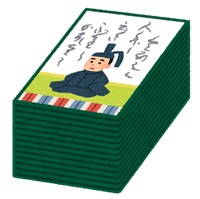
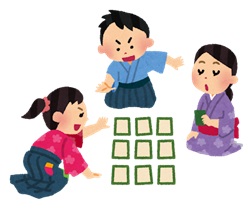
百人一首は「かるたとり」として楽しまれており、上の句(五七五)を聞いて、下の句(七七)を書いたカードを取るゲームとして、古くから日本人に親しまれています。私は小さいころからこのかるたゲームを何回もしていたので、中学生の時、かるた大会で、ひとりで50枚も取った記憶があります。
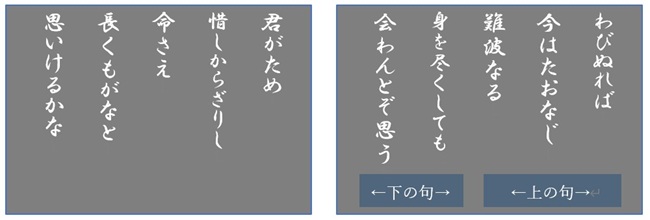
百人一首の中には、たくさんの恋の歌もあります。
和歌には、ある特徴があって、あえて一番言いたいことは書きません。えっと思われる方が多いと思いますが、そこには、日本独自の「察する」文化との深い関わりがあると言われています。つまり、歌人の書いた文字から、読み手がその隠された気持ちを想像するわけです。単に文字を読むことは誰にでもできますが、その心を詠むことは「思いやり」がなければできません。
昔のことばで書かれた和歌ですが、現在はその意味を今のことばに変えた本がたくさん出ています。過去に生きた人達が、どんな気持ちでいたのか、その時代を想像しながら、ゆっくり詠んでみたいと思い、数年前から、百人一首の本を買って持っていますが、日常生活に追われて、まだ全然読めていません。 いつか、ゆっくりその本と向き合える時間がとれたらいいなあと思っています。
Learn Japanese Listening with Video Lesson
In this video, Hayashi sensei explains the history of Hyakunin Isshu and demonstrates how to play Karuta. You'll also hear native Japanese pronunciation to practice your listening skills.
Learn Japanese Kanji with Furigana Reading Help
百人一首
百人一首は、千年以上前に生きた100人の 歌人が詠んだ歌を集めたもので「和歌」と言います。和歌は、「五七五七七」の31文字と決められています。
百人一首は「かるたとり」として楽しまれており、上の句(五七五)を聞いて、下の句(七七)を書いたカードを取るゲームとして、古くから日本人に親しまれています。わたしは小さいころからこのかるたゲームを何回もしていたので、中学生の時、かるた大会で、ひとりで50枚も取った記憶があります。
百人一首の中には、たくさんの恋の歌もあります。和歌には、ある特徴があって、あえて一番言いたいことは書きません。えっ、と思われる方が多いと思いますが、そこには、日本独自の「察する」文化との深い関わりがあると言われています。つまり、歌人の書いた文字から、読み手がその隠された気持ちを想像するわけです。単に文字を読むことは誰にでもできますが、その心を詠むことは「思いやり」がなければできません。
昔のことばで書かれた和歌ですが、現在はその意味を今のことばに変えた本がたくさん出ています。過去に生きた人達が、どんな気持ちでいたのか、その時代を想像しながら、ゆっくり詠んでみたいと思い、数年前から、百人一首の本を買って持っていますが、日常生活に追われて、まだ全然読めていません。 いつか、ゆっくりその本と向き合える時間がとれたらいいなあと思っています。
English translation for understanding
Hyakunin Isshu and Karuta : Japanese Traditional Games
“Hyakunin Isshu" is a collection of poems composed by 100 poets who lived more than a thousand years ago. These poems are called waka. A waka is a poem made up of 31 syllables in a fixed pattern: 5-7-5-7-7.
Hyakunin Isshu is enjoyed as a card game called karuta-tori. In this game, players listen to the first half of the poem (the 5-7-5 part), and try to grab the card that has the second half (the 7-7 part) written on it. It has long been loved by the Japanese people. Since I played this karuta game many times as a child, I remember being able to take as many as 50 cards by myself in a tournament when I was in junior high school.
Many of the poems in Hyakunin Isshu are about love.
Waka poetry has a unique feature: it deliberately leaves out the most important part that the poet wants to say. This may seem strange to many people, but it is said to be deeply connected with Japan’s unique culture of "sensing others' feelings without words". In other words, the reader is expected to imagine the hidden emotions behind the poet’s words. Anyone can read the written words, but understanding the poet's heart requires empathy.
Although the waka are written in old language, today there are many books that translate their meanings into modern Japanese. A few years ago, I bought one of these books because I wanted to slowly read the poems while imagining what people of the past were feeling and what their era was like. But everyday life keeps me busy, and I haven’t had a chance to read it yet. Someday, I hope I can find the time to sit down and enjoy that book at my own pace.
This week’s key vocabulary
百人一首 Poems of 100 historical figures
かるたとり Japanese card game
歌人 poet
独自の proprietary
察する文化 A culture of perception
隠された hidden
想像する imagine
読み手 reader
思いやり sympathy
記憶 memory
単に simply
Meet the Teacher
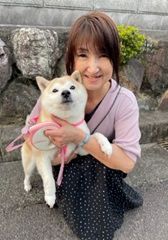
Japanese Language Teacher
I previously lived in Hong Kong for 10 years. There I taught Japanese for 3 years at a Japanese language school in Hong Kong and subsequently for 8 years after returning to Japan.
I want to overcome the language barrier and connect with people from all over the world! With this in mind, I look forward to meeting you and helping you do the same.
I aim to make my classes easy to understand, fun, and memorable. I want you to feel that you can do it!
Please come and experience what it's like to achieve your goals. We look forward to seeing you in the classroom.
Experience and Qualifications
- Level 2 of the English Language Proficiency Test
- Hong Kong General Chamber of Commerce Cantonese Intermediate
- Qualified as a medical office administrator by the Association for the Promotion of Technical Accreditation
- Completed the Japanese Language Teacher Training Course (420 hours and above) at Human Academy
- Passed the Japanese Language Teacher Proficiency Test
- Registered Japanese Language Teacher
- Licensed as a psychologist by the Japanese Psychological Association
Join Hayashi sensei's class and start learning Japanese today!