


What Does って (tte) Mean in Japanese? Natural Uses in Conversation
If you listen to natural Japanese conversation, you will hear って (tte) everywhere. It can be used for quoting what someone said, shortening という, saying ってこと, or introducing a topic in a casual way. This guide explains the most common uses with simple examples and real conversation patterns.
Written by Chiho Kamioka ·
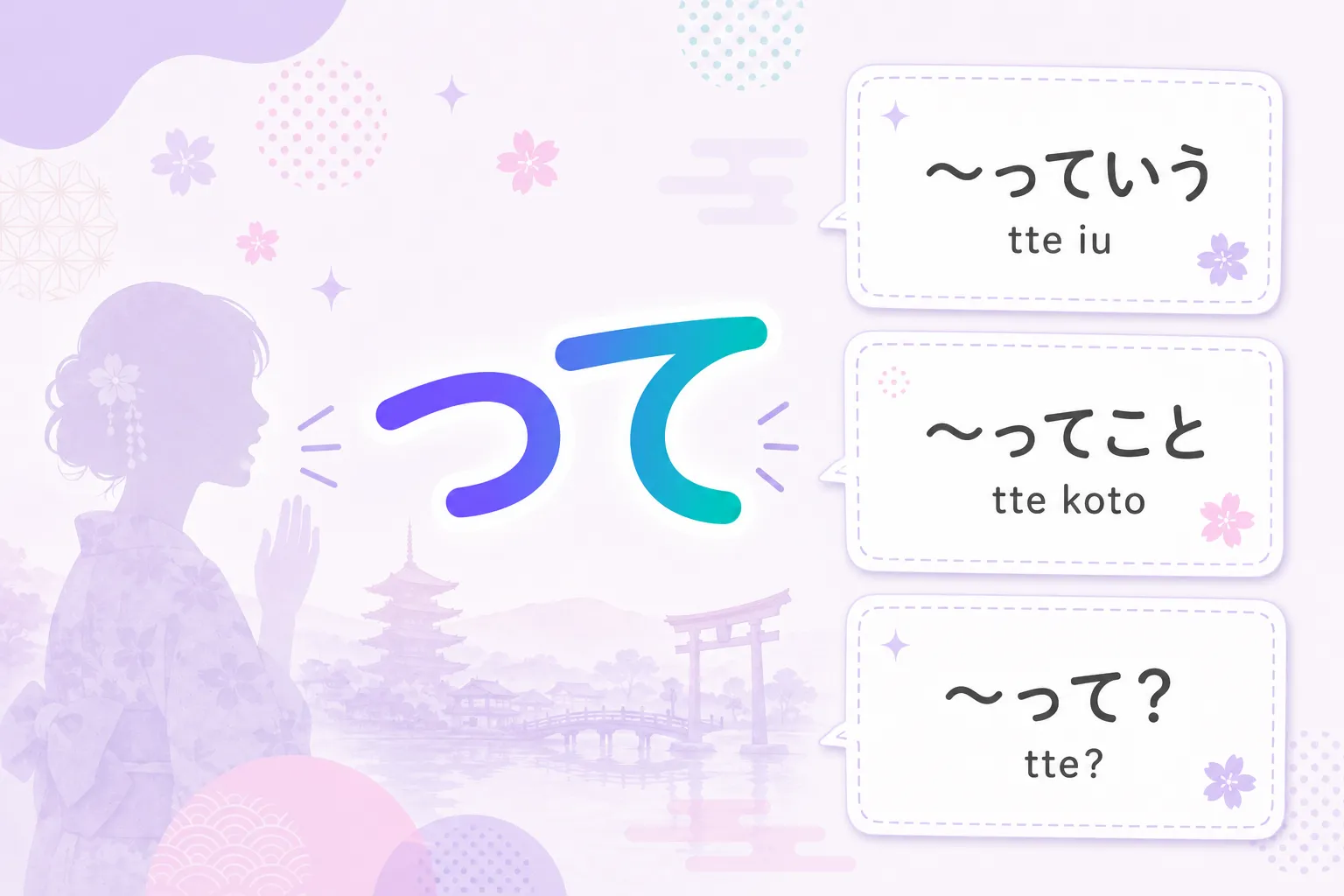
Quick Guide: What Does って Mean?
って (tte) does not have only one meaning. In everyday Japanese, it often replaces or shortens expressions built with と or という. It can also mark the topic of a casual sentence.
| Fuller / Textbook Form | Natural Spoken Form | Basic Use | Example |
|---|---|---|---|
| と言う
to iu
|
って言う
tte iu
|
quoting what someone says | 「行く」って言った。 |
| という + noun
to iu
|
っていう + noun
tte iu
|
naming or describing something | Japoninっていうサイト |
| ということ
to iu koto
|
ってこと
tte koto
|
“that means…” / confirming meaning | 明日は休みってこと? |
| というのは / は
to iu no wa / wa
|
って
tte
|
introducing a casual topic | 日本の夏って暑いね。 |
The exact meaning depends on what comes before and after って. The examples below show the patterns you are most likely to hear in everyday conversation.
と言う (to iu) vs って言う (tte iu): Quoting What Someone Says
〜と言う: (~to iu) is used to quote what someone says.
〜って言う: (~tte iu) is extremely common in casual conversation. Here, って works like the quotation particle と, but sounds more conversational.
Useful for
telling someone what another person said, repeating information, or reporting what you heard
Fuller form → Natural spoken form
田中さんは「明日行く」と言った。 → 田中さん、「明日行く」って言ってた。
tanaka-san wa "ashita iku" to itta. → tanaka-san, "ashita iku" tte itteta.
Tanaka said, “I’ll go tomorrow.”
Conversation 1
A: 山田さん、今日来る?
yamada-san, kyou kuru?
Is Yamada coming today?
B: ううん。今日は来ないって言ってたよ。
uun. kyou wa konai tte itteta yo.
No. Yamada said they aren’t coming today.
Conversation 2
A: 何時に集合?
nanji ni shuugou?
What time are we meeting?
B: 7時って聞いたよ。
shichiji tte kiita yo.
I heard it’s at seven.
Note: って can also be used with verbs such as 聞く (to hear / ask) and 思う (to think), especially in casual speech.
という (to iu) vs っていう (tte iu): Naming or Describing Something
〜という + noun: (~to iu + noun) is often used when naming, identifying, or describing a person, place, word, or thing.
〜っていう + noun: (~tte iu + noun) is the natural conversational form you will often hear in everyday Japanese.
Useful for
introducing a name, asking what a word means, or describing something the listener may not know
Fuller form → Natural spoken form
Japoninというサイトを知っていますか。 → Japoninっていうサイト、知ってる?
Japonin to iu saito o shitte imasu ka. → Japonin tte iu saito, shitteru?
Do you know a website called Japonin?
Conversation 1
A: 「推し」っていう言葉、知ってる?
"oshi" tte iu kotoba, shitteru?
Do you know the word “oshi”?
B: うん、知ってるよ。
un, shitteru yo.
Yeah, I know it.
Conversation 2
A: 昨日、誰と会ったの?
kinou, dare to atta no?
Who did you meet yesterday?
B: 佐藤さんっていう人。
satou-san tte iu hito.
Someone named Sato.
Note: In very casual speech, っていう may sound even shorter, but っていう is a useful form for learners to recognize and use first.
ということ (to iu koto) vs ってこと (tte koto): “That Means…”
〜ということ: (~to iu koto) can refer to the meaning, fact, or result of what has just been said.
〜ってこと: (~tte koto) is the common conversational form. It is especially useful when confirming what something means or drawing a conclusion.
Useful for
checking your understanding, saying “so that means…,” or confirming the result of something
Fuller form → Natural spoken form
明日は休みということですか。 → 明日は休みってこと?
ashita wa yasumi to iu koto desu ka. → ashita wa yasumi tte koto?
So that means tomorrow is a day off?
Conversation 1
A: 電車、止まってるみたい。
densha, tomatteru mitai.
It looks like the trains have stopped.
B: じゃあ、今日は行けないってこと?
jaa, kyou wa ikenai tte koto?
So that means we can’t go today?
Conversation 2
A: 来週から大阪で働くんだ。
raishuu kara oosaka de hatarakun da.
I’m going to work in Osaka starting next week.
B: え、引っ越すってこと?
e, hikkosu tte koto?
Oh, so you’re moving?
Using って to Introduce a Topic
In casual conversation, って can also introduce the topic you want to talk about. In this use, it can feel similar to “as for…” or “speaking of…” in English.
This use is common when asking what something is, giving an opinion, or bringing up a person or thing in conversation.
Common patterns
〜って何? = What is ~?
〜ってどう? = How is ~? / What do you think of ~?
〜っていいよね。 = ~ is nice, isn’t it?
Conversation 1
A: 「お盆」って何?
"obon" tte nani?
What is “Obon”?
B: 日本の夏の行事だよ。
nihon no natsu no gyouji da yo.
It’s a summer tradition in Japan.
Conversation 2
A: 京都っていいよね。
kyouto tte ii yo ne.
Kyoto is really nice, isn’t it?
B: うん。また行きたい。
un. mata ikitai.
Yeah. I want to go again.
Note: Topic-marking って is casual. You will hear it often with friends, family, and in relaxed conversation.
When Should You Use って?
って is especially common in relaxed spoken Japanese. It is very useful for listening because native speakers often use it where textbooks may show と, という, or ということ.
| Situation | Natural Choice |
|---|---|
| Conversation with friends or family | って, っていう, and ってこと are very common. |
| Casual messages and informal speech | って usually sounds natural when the relationship and situation are casual. |
| Formal writing, presentations, or polite business situations | Forms such as と, という, and ということ are generally safer and more appropriate. |
You do not need to use every type of って immediately. A good first step is to notice what comes after it: って言う, っていう + noun, ってこと, or simply 〜って… as a topic. That makes it much easier to understand in real conversations.
Mini Quiz: What Does って Mean Here?
Read each example and identify how って is being used.
A: 田中さん、明日来る?
B: 来ないって言ってたよ。
Show Hint & Answer
Hint
konai tte itteta yo.
Tanaka said they aren’t coming.
Answer
Here, って marks a quotation. It corresponds to と in 来ないと言っていた.
A: 「推し」っていう言葉、知ってる?
Show Hint & Answer
Hint
"oshi" tte iu kotoba, shitteru?
Do you know the word “oshi”?
Answer
っていう is the conversational form of という before a noun.
A: 明日はレッスンないよ。
B: じゃあ、休みってこと?
Show Hint & Answer
Hint
jaa, yasumi tte koto?
So that means it’s a day off?
Answer
ってこと is the conversational form of ということ.
A: 納豆っておいしい?
Show Hint & Answer
Hint
nattou tte oishii?
Is natto good?
Answer
Here, って introduces 納豆 as the topic of the sentence.
Practice Natural Japanese with Japonin Teachers
Japonin offers live online Japanese lessons where you can practice listening and speaking with experienced Japanese teachers and learn how expressions such as って are actually used in everyday conversation.

って (Tte) in Japanese FAQ
Since 2006, Japonin has helped over 6,000 learners worldwide study Japanese online with support from our experienced Japanese language teachers.

Written by Chiho Kamioka Founder of Japonin
The word って appears constantly in everyday Japanese, but it can be confusing because it does more than one job. I created this guide to help learners recognize the most common patterns and understand what native speakers mean when they hear って in natural conversation.
Ready to speak more natural Japanese?
Study Japanese with experienced teachers at Japonin.
Try two 50-minute live lessons and take the next step in your Japanese learning.
More Natural Japanese Guides
Explore more guides to help you understand the Japanese you hear in real conversations.