

Sound More Natural in Japanese: Nakya, Kamo & Ja Nai
Japanese often sounds shorter in everyday conversation than the forms you learn in textbooks. In this guide, you will learn three short forms you will often hear and use in everyday Japanese: 〜なきゃ, 〜かも, and 〜じゃない.
Written by Chiho Kamioka ·

Quick Guide: What’s the Difference?
Within each pair, the basic meaning is generally the same. The shorter form is more casual and more common in everyday conversation. What changes is mainly the form and how conversational the expression sounds.
| Full Form | Natural Spoken Form | Basic Meaning | What’s the Difference? |
|---|---|---|---|
| 〜なければならない
~nakereba naranai
|
〜なきゃ(ならない)
~nakya (naranai)
|
have to / need to | Same basic meaning. 〜なきゃ is more casual, and ならない is often omitted in conversation. |
| 〜かもしれない
~kamo shirenai
|
〜かも
~kamo
|
might / maybe | Same basic meaning. 〜かも is shorter and more casual. |
| 〜ではない
~de wa nai
|
〜じゃない
~ja nai
|
is not / am not / are not | Same basic meaning. 〜じゃない is more conversational and casual. |
The examples below show how these forms sound in real conversations and when you are likely to hear or use them.
What Is the Difference Between 〜なければならない (Nakereba Naranai) and 〜なきゃ (Nakya)?
〜なければならない: (nakereba naranai) means “have to” or “must.”
〜なきゃ: (nakya) is a common casual form. You may hear 〜なきゃならない, but in everyday conversation speakers often stop at 〜なきゃ when the meaning is clear.
Useful for
saying that you have to do something, need to leave, need to study, or have something that must be done
Full form → Shortened form → Common spoken form
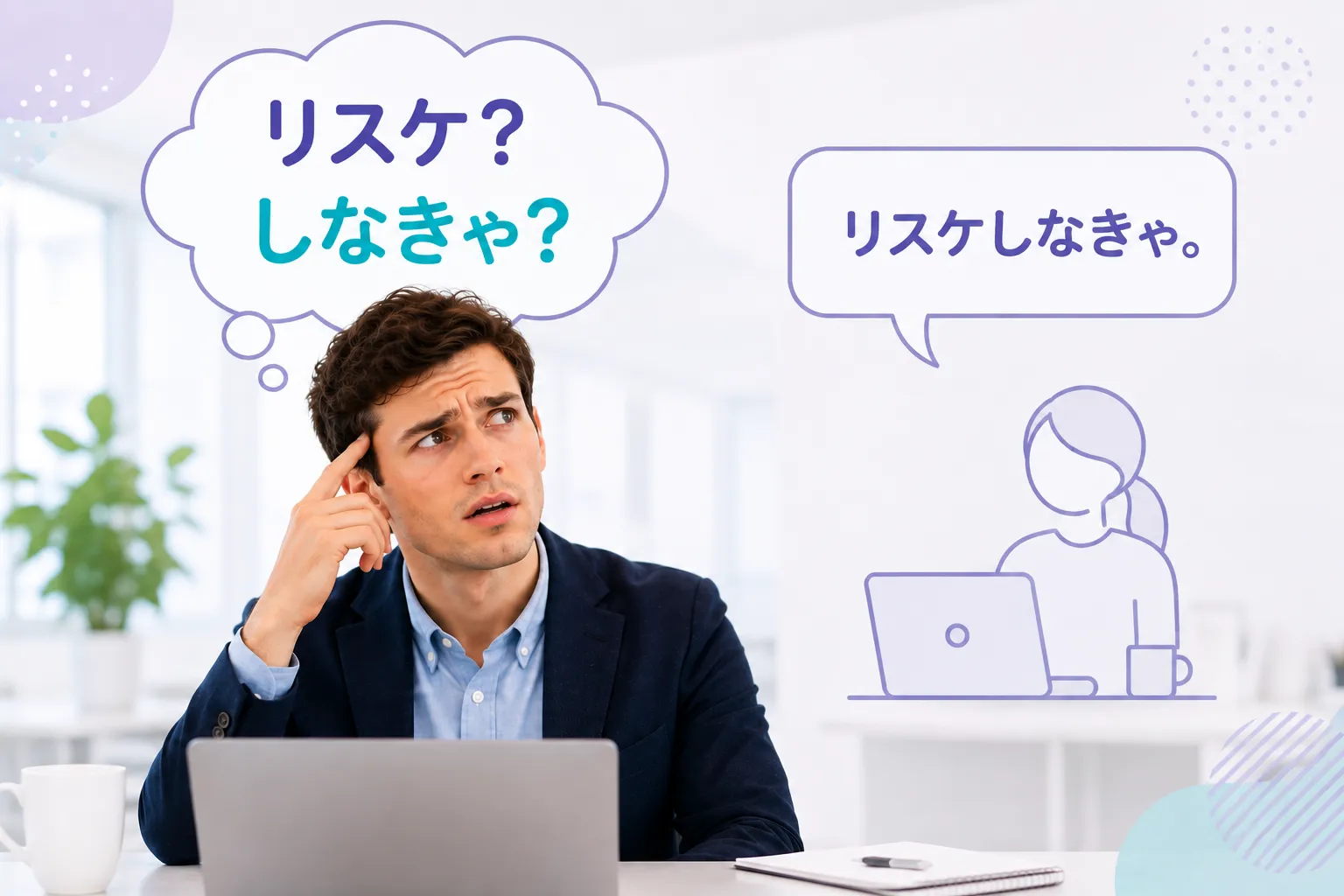
もう寝なければならない。 → もう寝なきゃならない。 → もう寝なきゃ。
mou nenakereba naranai. → mou nenakya naranai. → mou nenakya.
I have to go to bed.
Conversation 1
A: もう帰るの?
mou kaeru no?
Are you going home already?
B: うん。明日朝早いから、もう帰らなきゃ。
un. ashita asa hayai kara, mou kaeranakya.
Yeah. I have to go home because I have an early morning tomorrow.
Conversation 2
A: 映画、見ない?
eiga, minai?
Want to watch a movie?
B: ごめん。明日テストだから、勉強しなきゃ。
gomen. ashita tesuto dakara, benkyou shinakya.
Sorry. I have to study because I have a test tomorrow.
Note: In casual conversation, 〜なきゃ by itself is often enough to express “have to” or “need to.”
What Is the Difference Between 〜かもしれない (Kamo Shirenai) and 〜かも (Kamo)?
〜かもしれない: (kamo shirenai) expresses possibility and means something like “might,” “may,” or “maybe.”
〜かも: (kamo) is the common casual shortened form. The basic meaning is the same.
Useful for
talking about something that is possible but not certain, such as plans, weather, reasons, or what may happen
Full form → Natural spoken form
明日は雨かもしれない。 → 明日は雨かも。
ashita wa ame kamo shirenai. → ashita wa ame kamo.
It might rain tomorrow.
Conversation 1
A: 明日のパーティー、来る?
ashita no paatii, kuru?
Are you coming to the party tomorrow?
B: まだわからない。行けないかも。
mada wakaranai. ikenai kamo.
I’m not sure yet. I might not be able to go.
Conversation 2
A: 田中さん、まだ来ないね。
tanaka-san, mada konai ne.
Tanaka isn’t here yet.
B: 今日は忙しいかも。
kyou wa isogashii kamo.
Maybe Tanaka is busy today.
Note: 〜かも is common in casual conversation. In more polite speech, you may hear 〜かもしれません.
What Is the Difference Between 〜ではない (De Wa Nai) and 〜じゃない (Ja Nai)?
〜ではない: (de wa nai) is a negative form used with nouns and na-adjectives to say that something “is not” something.
〜じゃない: (ja nai) is the common conversational form. 〜では becomes 〜じゃ, while the meaning stays the same.
Useful for
saying that someone or something is not what another person thinks, or correcting information in everyday conversation
Full form → Natural spoken form
学生ではない。 → 学生じゃない。
gakusei de wa nai. → gakusei ja nai.
I’m not a student.
Conversation 1
A: あの人、先生?
ano hito, sensei?
Is that person a teacher?
B: ううん、先生じゃないよ。
uun, sensei ja nai yo.
No, that person isn’t a teacher.
Conversation 2
A: この会社、日本の会社?
kono kaisha, nihon no kaisha?
Is this a Japanese company?
B: ううん、日本の会社じゃないよ。
uun, nihon no kaisha ja nai yo.
No, it isn’t a Japanese company.
Note: 〜じゃない is extremely common in everyday conversation. In more formal or polite situations, you are more likely to hear or see 〜ではない or 〜ではありません.
When Should You Use the Full or Short Form?
The main difference is style and situation. Short forms such as 〜なきゃ, 〜かも, and 〜じゃない are especially common in relaxed everyday conversation.
| Situation | Which Form? |
|---|---|
| Conversation with friends or family | Short forms such as 〜なきゃ, 〜かも, and 〜じゃない are very common. |
| Casual messages or informal conversation | Short forms usually sound natural. |
| Formal speech or writing | Fuller or more polite forms are generally more appropriate, such as 〜なければなりません, 〜かもしれません, and 〜ではありません. |
You do not need to start using every short form immediately. First, learn to recognize them when you hear them, then try using them in casual conversation. This can help you both understand everyday Japanese and sound more natural when you speak.
Mini Quiz: Can You Restore the Full Form?
Read each short conversation and identify the fuller form behind the highlighted expression.
A: もう行くの?
B: うん。もう行かなきゃ。
Show Hint & Answer
Hint
A: mou iku no?
A: Are you leaving already?
B: un. mou ikanakya.
B: Yeah. I have to go.
Answer
行かなきゃ (ikanakya) → 行かなければならない (ikanakereba naranai)
A: 明日の天気、どうかな?
B: 雨かも。
Show Hint & Answer
Hint
A: ashita no tenki, dou kana?
A: What will the weather be like tomorrow?
B: ame kamo.
B: It might rain.
Answer
雨かも (ame kamo) → 雨かもしれない (ame kamo shirenai)
A: あの人、先生?
B: ううん、先生じゃないよ。
Show Hint & Answer
Hint
A: ano hito, sensei?
A: Is that person a teacher?
B: uun, sensei ja nai yo.
B: No, that person isn’t a teacher.
Answer
先生じゃない (sensei ja nai) → 先生ではない (sensei de wa nai)
Practice Natural Japanese with Japonin Teachers
Japonin offers live online Japanese lessons where you can practice listening and speaking with experienced Japanese teachers and learn how textbook grammar is actually used in everyday conversation.

Natural Japanese Short Forms FAQ
Since 2006, Japonin has helped over 6,000 learners worldwide study Japanese online with support from our experienced Japanese language teachers.

Written by Chiho Kamioka Founder of Japonin
One of the challenges of learning Japanese is that familiar textbook expressions can sound very different in everyday conversation. I created this guide to help learners recognize and use common forms such as 〜なきゃ, 〜かも, and 〜じゃない, and feel more comfortable with natural spoken Japanese.
Ready to speak more natural Japanese?
Try two 50-minute live lessons with Japonin teachers.
Practice listening to natural spoken Japanese and using everyday expressions in real conversation.
More Natural Japanese Guides
Explore more guides to help you understand the Japanese you hear in real conversations.