

JLPT Grammar Examples from N5 to N1
Learn useful JLPT grammar from beginner N5 to advanced N1 through natural Japanese examples and real-life situations.
Written by Chiho Kamioka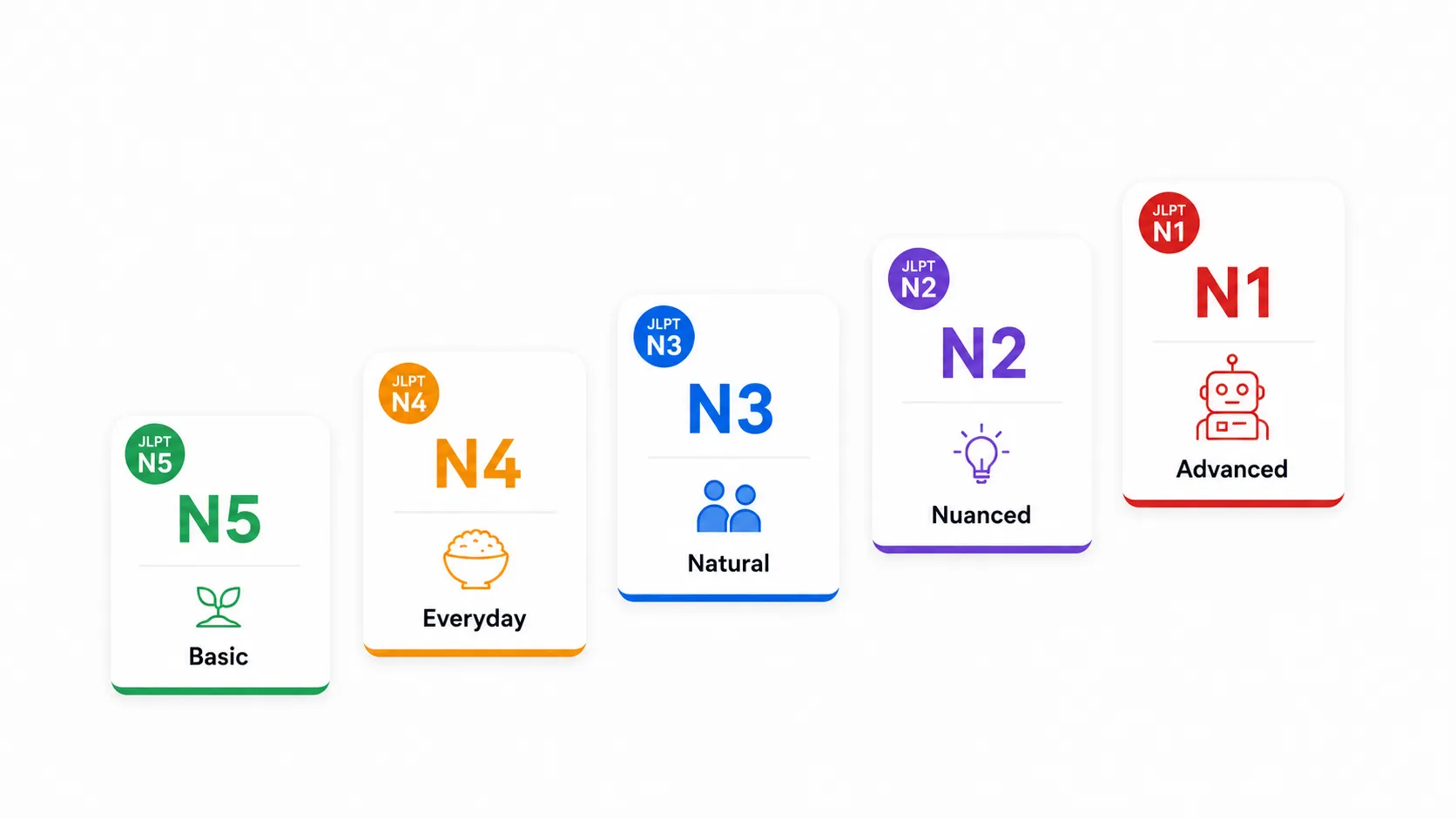
Learn JLPT Grammar Through Real Japanese
Grammar is easier to remember when you see how it works in real Japanese. That’s why we created this collection of JLPT grammar guides from N5 to N1, with natural examples and real-life situations that show when and why each pattern is used.
Start with your current level, or explore the levels to see how Japanese develops from simple everyday expressions to more detailed explanations, nuanced opinions, and advanced communication.
Choose Your JLPT Grammar Level
Each guide focuses on useful grammar patterns at one JLPT level and shows how they work in natural Japanese.
Start with Simple Japanese
Learn how to introduce yourself using basic N5 grammar. Practice saying your name, talking about things you like, and describing your hobbies.
Grammar: わたしは〜です ・ 〜がすきです ・ しゅみは〜ことです
Explore JLPT N5 Grammar →Talk About Actions, Habits, and Change
Learn grammar for trying something new, making an effort, and talking about abilities or situations that change over time.
Grammar: 〜てみる ・ 〜ようにする ・ 〜ようになる
Explore JLPT N4 Grammar →Express Yourself More Naturally
Move beyond simple sentences and learn how to describe gradual changes, personal habits, and information you have heard from other people.
Grammar: 〜てくる ・ 〜ことにしている ・ 〜らしいです
Explore JLPT N3 Grammar →Add Nuance to Your Explanations
Learn how to avoid overly simple statements, challenge assumptions, and explain ideas more carefully in everyday and workplace Japanese.
Grammar: 〜わけではない ・ 〜からといって〜とは限らない ・ 〜といっても
Explore JLPT N2 Grammar →Discuss Complex Ideas in Japanese
Practice advanced grammar for explaining opinions and discussing topics such as technology, society, work, and the future in a more formal and analytical way.
Grammar: 〜にとどまらず ・ 〜をふまえて ・ 〜なくしては
Explore JLPT N1 Grammar →What You Can Express at Each JLPT Level
As you move through the JLPT levels, grammar allows you to do more than build longer sentences. You gradually become able to describe situations more precisely, explain your thinking, and express subtle differences in meaning.
Practice JLPT Grammar with Japonin Teachers
Understanding a grammar pattern is easier when you can see how it works in context. Working with a teacher can help you understand difficult points, notice differences in nuance, and use grammar more naturally.
JLPT Grammar FAQ
Since 2006, Japonin has helped over 6,000 learners worldwide study Japanese online with support from our experienced Japanese language teachers.

Written by Chiho Kamioka Founder of Japonin JLPT Guide Editor
Grammar becomes much easier to remember when you understand the situation behind it. I created these JLPT grammar guides to help learners move beyond memorizing meanings and see how expressions are actually used as Japanese becomes more advanced.
Ready to practice Japanese grammar?
Try two 50-minute live Japanese lessons with Japonin teachers.
Try 2 Free Live LessonsMore JLPT Guides
Explore more Japonin guides to understand what to study, how long JLPT preparation may take, and how JLPT levels compare with other proficiency frameworks.