JLPT Study Guides from N5 to N1
Explore what to study at each JLPT level, from beginner N5 to advanced N1, including kanji, vocabulary, grammar, reading, listening, and study strategies.
Written by Chiho Kamioka
What Should You Study for the JLPT?
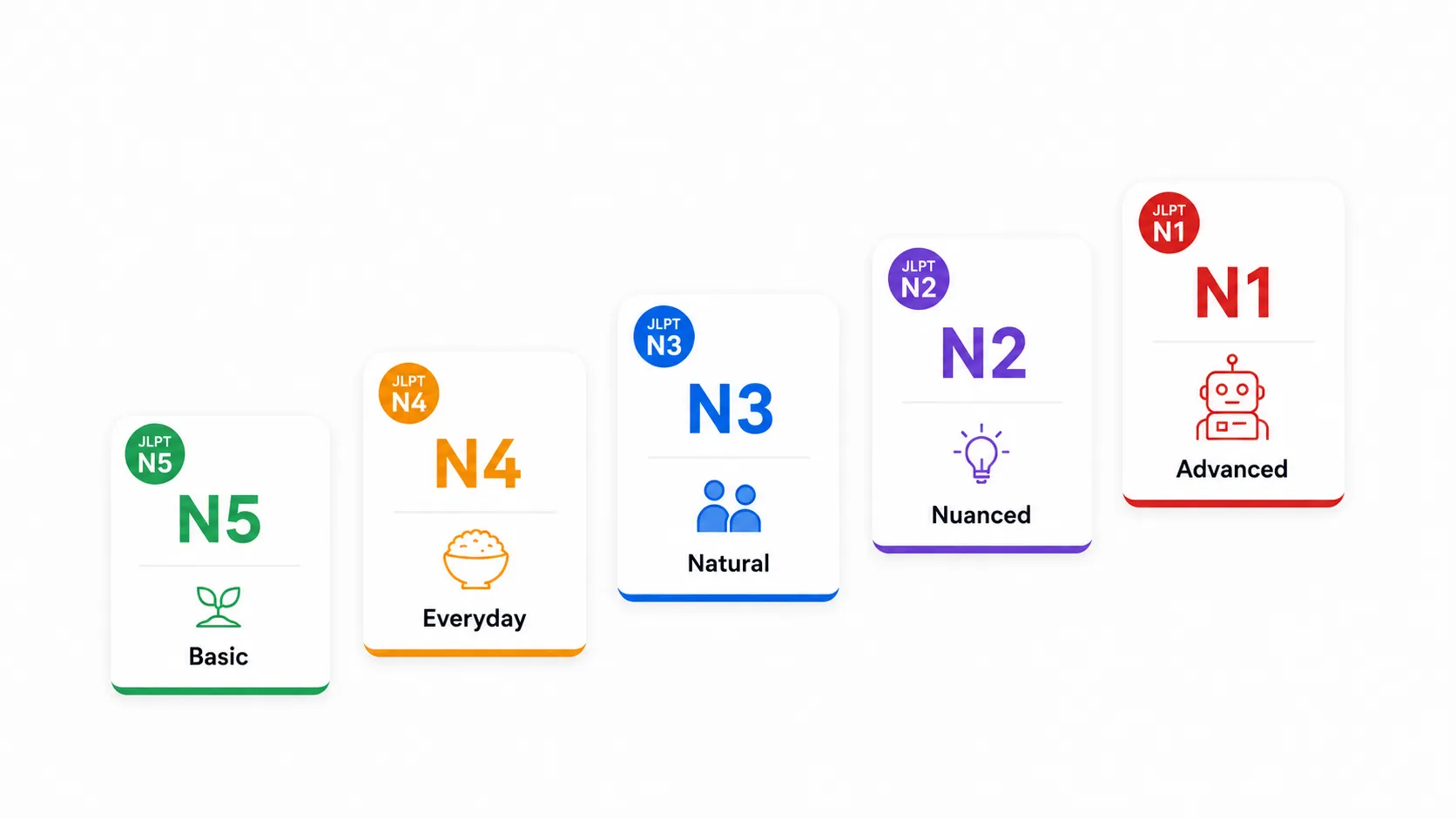
Preparing for the JLPT becomes much easier when you know what to focus on at your level. The skills you need change significantly as you move from N5 to N1. Beginner learners focus on essential kanji, everyday vocabulary, and basic sentence patterns, while advanced learners need to understand longer texts, subtle grammar, abstract vocabulary, and implied meaning.
Each JLPT level requires a different balance of skills. Choose your target level below to see what to focus on for kanji, vocabulary, grammar, reading, and listening, along with study strategies and practical preparation tips.
Choose Your JLPT Level
Start with your target JLPT level, or compare the guides to see how Japanese develops from basic everyday language to advanced reading and communication.
Build Your Japanese Foundation
Start with essential kanji and everyday vocabulary while building the basic reading and listening skills needed for simple Japanese.
Study target: About 100 kanji ・ 800–900 words
Explore the JLPT N5 Guide →Strengthen Everyday Japanese
Expand your vocabulary and kanji while learning grammar that helps you understand longer sentences, explanations, and everyday situations.
Study target: About 300 kanji ・ 1,500 words
Explore the JLPT N4 Guide →Move Into Intermediate Japanese
Build the vocabulary, grammar, and reading skills needed to understand longer conversations, explanations, and texts with greater complexity.
Study target: About 650 kanji ・ 3,500+ words
Explore the JLPT N3 Guide →Understand Nuance and Longer Texts
Develop the vocabulary, grammar, reading, and listening skills needed to follow abstract topics, logical arguments, and subtle differences in meaning and intention.
Study target: About 1,000 kanji ・ 6,000+ words
Explore the JLPT N2 Guide →Develop Advanced Japanese Skills
Prepare for complex reading and listening with advanced vocabulary, formal grammar, subtle nuance, implied meaning, and abstract ideas.
Study target: About 2,000 kanji ・ 10,000+ words
Explore the JLPT N1 Guide →JLPT N5–N1 Level Comparison
The amount of vocabulary and kanji increases at each level, but the biggest change is not simply how many words you know. As you progress, you also need to understand longer sentences, more abstract ideas, subtle grammar, and increasingly complex reading and listening.
Note: Kanji and vocabulary numbers are approximate study targets rather than fixed requirements. Use them as a guide for planning your study.
Prepare for the JLPT with Japonin Teachers
A study guide can help you understand what you need to learn. Working with a teacher can help you identify your weak areas, understand difficult points, and focus your practice where you need it most.
JLPT Study Guide FAQ
Since 2006, Japonin has helped over 6,000 learners worldwide study Japanese online with support from our experienced Japanese language teachers.

Written by Chiho Kamioka Founder of Japonin JLPT Guide Editor
Knowing what to study at each JLPT level can make a big goal feel much more manageable. I created these guides to help learners see how Japanese develops from N5 to N1 and focus on the skills they need for their next step.
Ready to prepare for the JLPT?
Try two 50-minute live Japanese lessons with Japonin teachers.
Try 2 Free Live LessonsMore JLPT Guides
Explore more Japonin guides to understand JLPT grammar, study time, and how JLPT levels compare with other proficiency frameworks.