Wakarimasen vs. Shirimasen: How to Say “I Don’t Know” in Japanese
Both わかりません (wakarimasen) and 知りません (shirimasen) can mean “I don’t know.” So which one should you use? And is shirimasen really rude? The answer may surprise you.
Updated: November 8, 2026
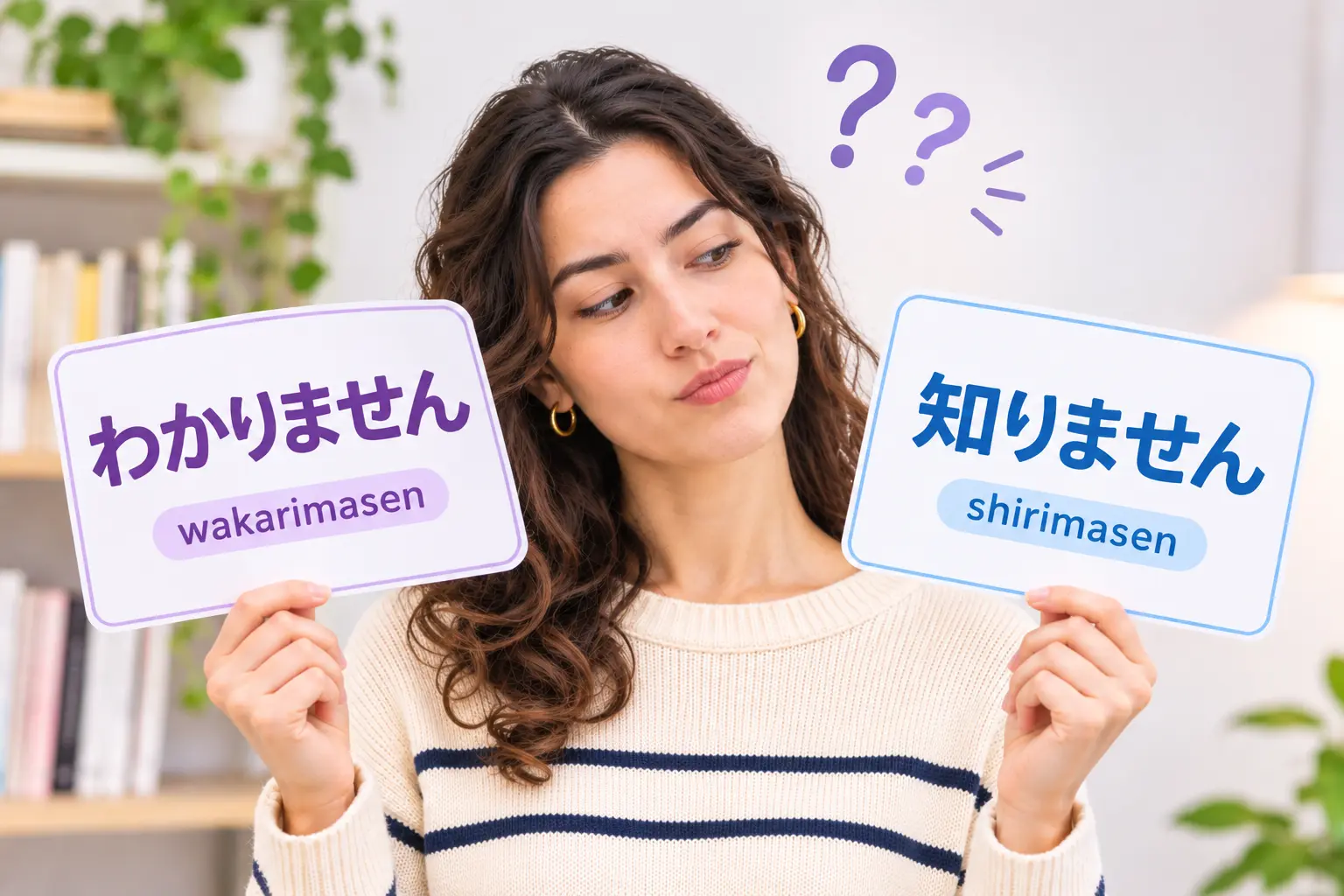
Quick Definition
Use wakarimasen when you don't understand something or aren't sure of the answer. Use shirimasen when you don't have certain information or aren't familiar with something.
| Expression | When to use it | Example |
|---|---|---|
| わかりません (wakarimasen) |
When you don't understand something or aren't sure of the answer. | 使い方がわかりません。 I don't understand how to use it. |
| 知りません (shirimasen) |
When you don't have the information or aren't familiar with something. | その作家を知りません。 I don't know that author. |
Sometimes both expressions can be used in the same situation. The examples below will help you understand the difference.
When to Use Wakarimasen
When you do not understand something
Use わかりません when you don't understand something or don't know how to do it.
Situation: A asks a colleague how to use an app.
A: このアプリの使い方を教えてください。
kono apuri no tsukaikata o oshiete kudasai.
Could you show me how to use this app?
B: すみません、使い方がよくわかりません。
sumimasen, tsukaikata ga yoku wakarimasen.
Sorry, I don't really know how to use it.
When You Can't Give an Answer Yet
まだわかりません (mada wakarimasen) means “I don't know yet” or “I'm not sure yet.” It is useful when you cannot give a definite answer yet.
Situation: Two coworkers are talking about next week's drinking party.
A: 来週の飲み会、参加できますか?
raishuu no nomikai, sanka dekimasu ka?
Can you make it to next week's drinking party?
B: すみません、まだわかりません。明日までにお返事してもいいですか?
sumimasen, mada wakarimasen. ashita made ni ohenji shite mo ii desu ka?
Sorry, I'm not sure yet. May I get back to you by tomorrow?
When to Use Shirimasen
When you are unfamiliar with someone or something
知りません is used when you do not know a person, have not heard of something, or do not have certain information.
Situation: Two friends are looking at books.
A: この作家を知っていますか。
kono sakka o shitte imasu ka.
Do you know this author?
B: いいえ、知りません。どんな本を書くんですか。
iie, shirimasen. donna hon o kaku n desu ka.
No, I'm not familiar with them. What kind of books do they write?
A: ミステリー小説です。
misuterii shousetsu desu.
Mystery novels.
B: そうですか。読んでみたいです。
sou desu ka. yonde mitai desu.
Oh, I see. I'd like to read one.
How to Say “I Didn't Know That” in Japanese
知りませんでした (shirimasen deshita) means “I didn't know.” It is a natural response when someone tells you something you didn't know before.
A: あのパン屋、月曜日は休みなんですよ。
ano pan'ya, getsuyoubi wa yasumi nan desu yo.
That bakery is closed on Mondays.
B: そうなんですか。知りませんでした。
sou nan desu ka. shirimasen deshita.
Oh, really? I didn't know that.
Is Shirimasen Rude?
No. Shirimasen is not rude by itself. It is a polite way to say that you do not know something. For example, when someone asks if you know a particular author, saying いいえ、知りません is perfectly natural.
However, when someone asks for help or information, simply saying shirimasen may sound abrupt or dismissive, depending on the situation and your tone.
Situation: A coworker asks about tomorrow's meeting.
A: 明日の会議、何時からですか。
ashita no kaigi, nanji kara desu ka.
What time does tomorrow's meeting start?
B: 知りません。
shirimasen.
I don't know.
B's answer is grammatically correct, but in this situation, it may sound abrupt because it offers no further help.
A more considerate response:
B: すみません、私も知りません。確認してみますね。
sumimasen, watashi mo shirimasen. kakunin shite mimasu ne.
Sorry, I don't know either. I'll check.
Both replies use shirimasen, but the second one offers to help. The difference is not just the choice of words. It is also how you respond to the other person.
Remember: Shirimasen is not always rude. The situation, your tone, and what you say next all affect how your answer sounds.
Can You Use Wakarimasen and Shirimasen Interchangeably?
Sometimes both wakarimasen and shirimasen can be used to answer the same question.
この店、何時に閉まるか知っていますか。
kono mise, nanji ni shimaru ka shitte imasu ka.
Do you know what time this shop closes?
You could answer:
- いいえ、知りません。 (iie, shirimasen.)
No, I don't know. You do not have the information. - すみません、わかりません。 (sumimasen, wakarimasen.)
Sorry, I'm not sure. You cannot give the answer.
Both answers are natural here. Even if someone asks 知っていますか, you do not always have to reply with 知りません.
However, if you do not understand an explanation, わかりません is the more natural choice.
Polite and Casual Ways to Say “I Don't Know” in Japanese
| Meaning | Polite | Casual |
|---|---|---|
| I know / I'm familiar with it | 知っています (shitte imasu) |
知っている/知ってる (shitte iru / shitteru) |
| I don't know / I'm unfamiliar with it | 知りません (shirimasen) |
知らない (shiranai) |
| I understand / I know the answer | わかります (wakarimasu) |
わかる (wakaru) |
| I don't understand / I'm not sure | わかりません (wakarimasen) |
わからない (wakaranai) |
For everyday replies, remember that the usual negative form of 知っています is 知りません, not 知っていません.
In casual conversation, you may also hear わかんない (wakannai), a spoken form of わからない. With someone you have just met, わかりません is a useful polite choice.
Mini Quiz: Wakarimasen or Shirimasen?
Which response sounds more natural in each situation? Choose A or B, then open “Show Answer” to check.
Question 1
A coworker explains a new office procedure, but you don't understand the explanation. What do you say?
- すみません、よく知りません。
sumimasen, yoku shirimasen.
- すみません、よくわかりません。
sumimasen, yoku wakarimasen.
Show Answer
Answer: B. Use wakarimasen when you don't understand an explanation. Shirimasen is more about not having certain information or knowledge.
Question 2
A friend asks if you know a particular Japanese singer. You have never heard of that singer. Which reply is more natural?
- いいえ、知りません。
iie, shirimasen.
- いいえ、わかりません。
iie, wakarimasen.
Show Answer
Answer: A. Shirimasen is the more natural choice when you have never heard of someone or are not familiar with them.
Question 3
A coworker asks if you can help at an event next Saturday. You still need to check your schedule. What do you say?
- まだわかりません。予定を確認します。
mada wakarimasen. yotei o kakunin shimasu.
- まだ知りません。予定を確認します。
mada shirimasen. yotei o kakunin shimasu.
Show Answer
Answer: A. Mada wakarimasen is natural when you cannot give a definite answer yet, such as when you still need to check your schedule.
Question 4
A coworker asks which room will be used for a meeting. You don't know, but you can check. Which reply sounds more considerate?
- 知りません。
shirimasen.
- すみません、知りません。確認してみますね。
sumimasen, shirimasen. kakunin shite mimasu ne.
Show Answer
Answer: B. Both replies use shirimasen, but B offers to check. Shirimasen is not rude by itself. The situation, your tone, and what you say next affect how your response sounds.
FAQ: “I Don’t Know” in Japanese
Can wakarimasen mean “I don’t know”?
Yes. It can mean “I don’t understand,” “I’m not sure,” or “I don’t know,” depending on the situation.
Is shiranai always rude?
No. 知らない (shiranai) is the casual form of 知りません (shirimasen). It is not automatically rude, but your tone and the situation can affect how it sounds.
How do I say “I didn’t know that” in Japanese?
知りませんでした (shirimasen deshita) is a polite expression. In casual conversation, you can say 知らなかった (shiranakatta).
Practice with Japonin (JOI) Teachers
Knowing the difference between wakarimasen and shirimasen is one thing. Using them naturally in conversation takes practice.
In Japonin's live online lessons, you can practice these expressions in everyday situations with support from Japanese teachers.
Explore Japonin’s Japanese conversation lessons →
Start with 2 Free Trial Lessons
Japonin Deep Dive / Conversation Japanese

Japonin (JOI) has provided online Japanese lessons since 2006, helping learners around the world build practical communication skills.

Written by Chiho Kamioka Founder
Even a simple “I don’t know” can sound different depending on the situation. Knowing when to use wakarimasen and shirimasen can help you express yourself more clearly and respond more naturally in everyday Japanese conversations.