せっかく vs. わざわざ (Sekkaku vs. Wazawaza): What’s the Difference?
Both せっかく (sekkaku) and わざわざ (wazawaza) can be used when someone makes an effort, but they emphasize different things. One focuses on a valuable opportunity or effort, while the other focuses on the extra effort someone makes. Let’s look at how they are used in everyday Japanese.
Published: November 27, 2026
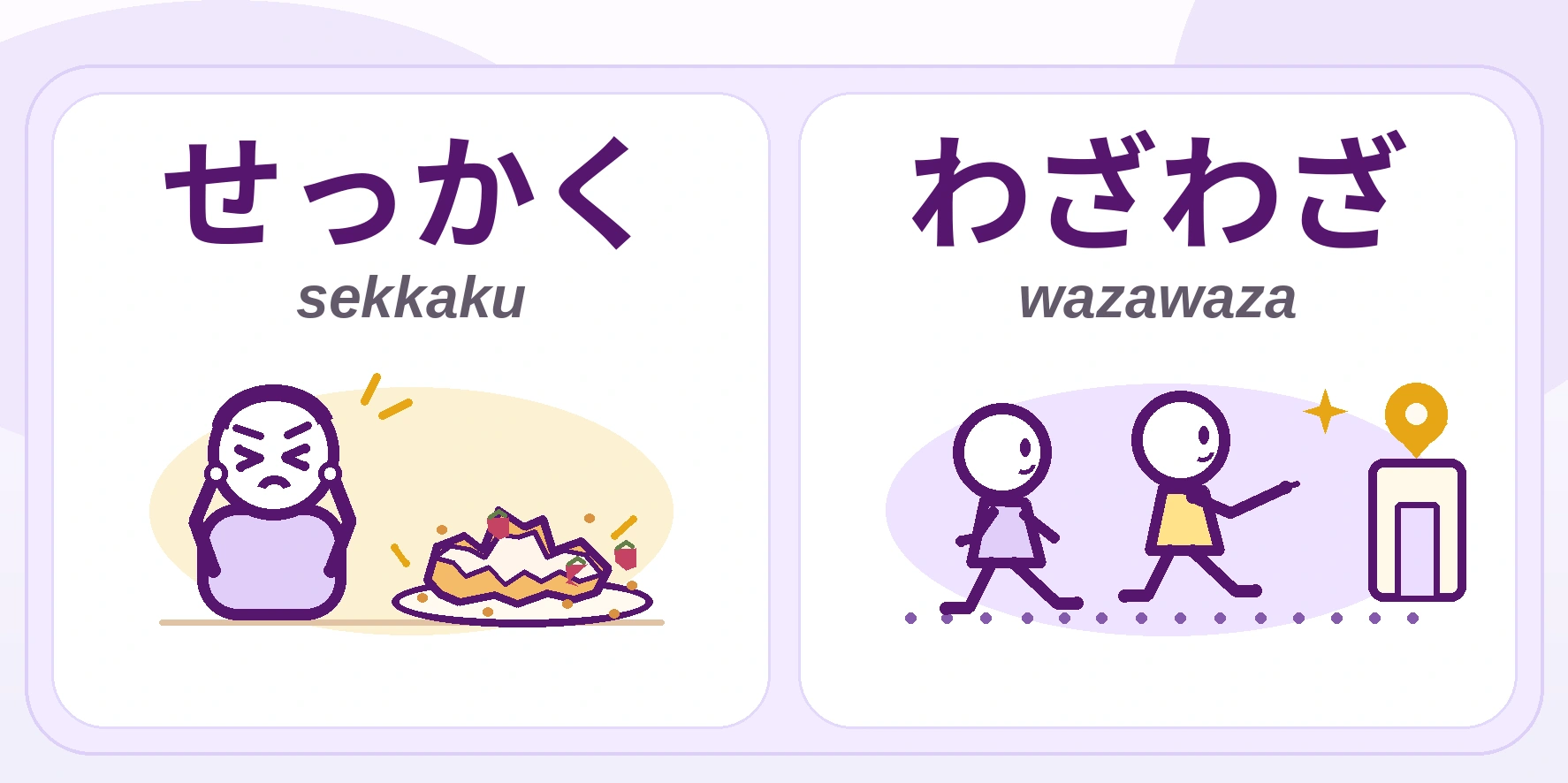
Quick Definition: せっかく vs. わざわざ
Use せっかく (sekkaku) when you want to make the most of an opportunity or express regret when an opportunity or effort goes to waste. Use わざわざ (wazawaza) when someone goes out of their way to do something. It can express appreciation or suggest that the extra effort was unnecessary.
| Expression | Main idea | Example |
|---|---|---|
| せっかく sekkaku |
A valuable opportunity or effort. | せっかく日本に来たんだから、温泉に入ってみたい。 I’m in Japan, so I’d like to try a hot spring while I’m here. |
| わざわざ wazawaza |
Going out of one’s way to do something. | わざわざ来てくださって、ありがとうございます。 Thank you for coming all this way. |
Easy way to remember: Think about what the speaker is focusing on.
せっかく: “What a great opportunity!” or “What a waste of an opportunity or effort!”
わざわざ: “Someone went out of their way to do this.”
せっかく (Sekkaku): When to Use It
1. When you want to make the most of an opportunity
Use せっかく when you have a good opportunity and want to make the most of it. It is often used when making a suggestion.
Situation: Two friends are on a day trip in Kyoto.
A: 次、どこに行こうか。
tsugi, doko ni ikou ka.
Where shall we go next?
B: せっかく京都に来たんだから、抹茶パフェでも食べない?
sekkaku Kyouto ni kitan dakara, matcha pafe demo tabenai?
Since we’re in Kyoto, why don’t we try a matcha parfait?
2. When an opportunity or effort goes to waste
せっかく〜のに is often used to express disappointment when something does not turn out as you had hoped.
Situation: A friend has just baked a cake.
A: あれ?どうしたの?
are? doushita no?
Hey, what happened?
B: ケーキ、落としちゃった。せっかくおいしそうに焼けたのに…。
keeki, otoshichatta. sekkaku oishisou ni yaketa noni...
I dropped the cake. It looked so good, too...
In casual conversation, a sentence can end with せっかく〜のに when the situation is already clear.
わざわざ (Wazawaza): When to Use It
1. When someone goes out of their way to help you
Use わざわざ to acknowledge the extra time or effort someone has taken. It is often used when thanking someone.
Situation: A local person offers to walk with a tourist to the station.
A: 駅まで一緒に行きましょうか。
eki made issho ni ikimashou ka.
Shall I walk you to the station?
B: いいんですか?
iin desu ka?
Really? Is that okay?
A: ええ、すぐそこですから。
ee, sugu soko desu kara.
Of course. It’s just around the corner.
B: わざわざすみません。ありがとうございます。
wazawaza sumimasen. arigatou gozaimasu.
Sorry to trouble you. Thank you so much.
2. When the extra effort seems unnecessary
わざわざ can also express surprise or annoyance when someone does something that seems unnecessary.
Situation: Two friends are talking about a phone call.
A: さっきの電話、何だったの?
sakki no denwa, nan datta no?
What was that call about?
B: 明日の集合時間の確認。わざわざ電話しなくても!LINEでいいのにね。
ashita no shuugou jikan no kakunin. wazawaza denwa shinakute mo! LINE de ii noni ne.
Just to confirm what time we’re meeting tomorrow. They didn’t have to call! A LINE message would’ve been fine.
せっかく vs. わざわざ (Sekkaku vs. Wazawaza): The Real Difference
Sometimes both expressions can be used in the same situation, but they emphasize different things.
Example: Finding a shop closed
You visit a shop far from home, only to find that it is closed. Both of the following expressions are natural.
| Japanese | Natural English meaning | Focus |
|---|---|---|
| せっかく来たのに、休みかあ…。 sekkaku kita noni, yasumi kaa... |
What a shame! We came here, but it’s closed. | A missed opportunity. |
| わざわざ来たのに、休みかあ…。 wazawaza kita noni, yasumi kaa... |
We came all this way, and it’s closed. | The extra time and effort spent getting there. |
Common Patterns with せっかく (Sekkaku)
Here are some common ways to use せっかく in everyday Japanese.
| Pattern | Japanese example | English |
|---|---|---|
| せっかく〜のに | せっかく来たのに、休みだった。 sekkaku kita noni, yasumi datta. |
What a shame it was closed when we got there. |
| せっかく〜んだから | せっかく来たんだから、楽しもうよ。 sekkaku kitan dakara, tanoshimou yo. |
Since we’re here, let’s enjoy ourselves. |
| せっかくの + noun | せっかくの休みだし、どこか行かない? sekkaku no yasumi da shi, dokoka ikanai? |
We’ve got a day off. Why don’t we go somewhere? |
| せっかくだし | せっかくだし、写真を撮ろうよ。 sekkaku da shi, shashin o torou yo. |
Since we’re here, let’s take a picture. |
Natural Japanese Conversations
1. せっかく (Sekkaku): Before a concert
Situation: Two friends arrive early for a concert.
A: まだ開場まで時間あるね。
mada kaijou made jikan aru ne.
We’ve still got some time before the doors open.
B: せっかくだし、先にグッズ見ていかない?
sekkaku da shi, saki ni guzzu mite ikanai?
Since we’ve got time, why don’t we check out the merch first?
2. わざわざ (Wazawaza): Shopping in person
You can also use わざわざ to describe your own actions, especially when you realize that the extra effort was unnecessary.
Situation: Two friends are talking about a recent purchase.
A: それ、ネットでも買えるよ。
sore, netto demo kaeru yo.
You can buy that online, too.
B: えっ、そうなの?わざわざお店まで買いに行ったのに。
e, sou nano? wazawaza omise made kai ni itta noni.
Really? I went all the way to the store to buy it!
Mini Quiz: せっかく or わざわざ?
Choose the best answer for each situation. Open “Show Answer” to check.
Question 1
It was raining, but the sun is out now. Which expression is more natural?
- せっかく晴れたんだし、散歩しない?
sekkaku haretan da shi, sanpo shinai?
- わざわざ晴れたんだし、散歩しない?
wazawaza haretan da shi, sanpo shinai?
Show Answer
Answer: A. せっかく is used because the good weather is an opportunity to enjoy a walk.
Question 2
A neighbor brings you a package that was delivered to the wrong address. Which expression emphasizes their extra effort?
- 届けてくださって、ありがとうございます。
todokete kudasatte, arigatou gozaimasu.
- わざわざ届けてくださって、ありがとうございます。
wazawaza todokete kudasatte, arigatou gozaimasu.
Show Answer
Answer: B. Both expressions are polite, but わざわざ acknowledges the extra effort your neighbor made.
Question 3
A friend says:
せっかく予約したのに、行けなくなっちゃった。
sekkaku yoyaku shita noni, ikenaku nacchatta.
What is your friend expressing?
- Disappointment about not being able to go after making a reservation.
- Appreciation for someone who made a reservation for them.
Show Answer
Answer: A. せっかく〜のに expresses disappointment that an opportunity or effort has gone to waste.
FAQ: せっかく and わざわざ
Can I use せっかくですが (sekkaku desu ga) to turn down an invitation politely?
Yes. It is a natural way to acknowledge an invitation or offer before politely declining.
せっかくですが、その日は都合がつかなくて。
sekkaku desu ga, sono hi wa tsugou ga tsukanakute.
Thank you for inviting me, but I can’t make it that day.
Is わざわざ (wazawaza) the same as わざと (wazato)?
No. わざと means doing something on purpose rather than by accident. わざわざ emphasizes the extra time or effort someone takes to do something.
コップをわざと落とした。
koppu o wazato otoshita.
They dropped the glass on purpose.
Does わざわざ (wazawaza) always express appreciation?
No. It can express appreciation, surprise, or criticism, depending on the situation and tone of voice.
Practice with Japonin (JOI) Teachers
In Japonin’s live online Japanese lessons, you can practice using せっかく and わざわざ while talking about your own experiences with a Japanese teacher.
Explore Japonin’s Japanese conversation lessons →
Start with 2 Free Trial Lessons
Japonin Deep Dive / Conversation Japanese
Japonin (JOI) has provided online Japanese lessons since 2006, helping learners around the world build practical communication skills.

Written by Chiho Kamioka Founder
Sekkaku and wazawaza are common expressions in everyday Japanese. Understanding the difference can help you express appreciation, disappointment, and the desire to make the most of an opportunity more naturally.