Ki ni Naru vs. Ki ni Suru: What’s the Difference in Japanese?
Both 気になる (ki ni naru) and 気にする (ki ni suru) can describe something on your mind. But one can also mean “I'm curious” or even “I'm interested in someone.” How do you know which expression to use?
Published: November 22, 2026
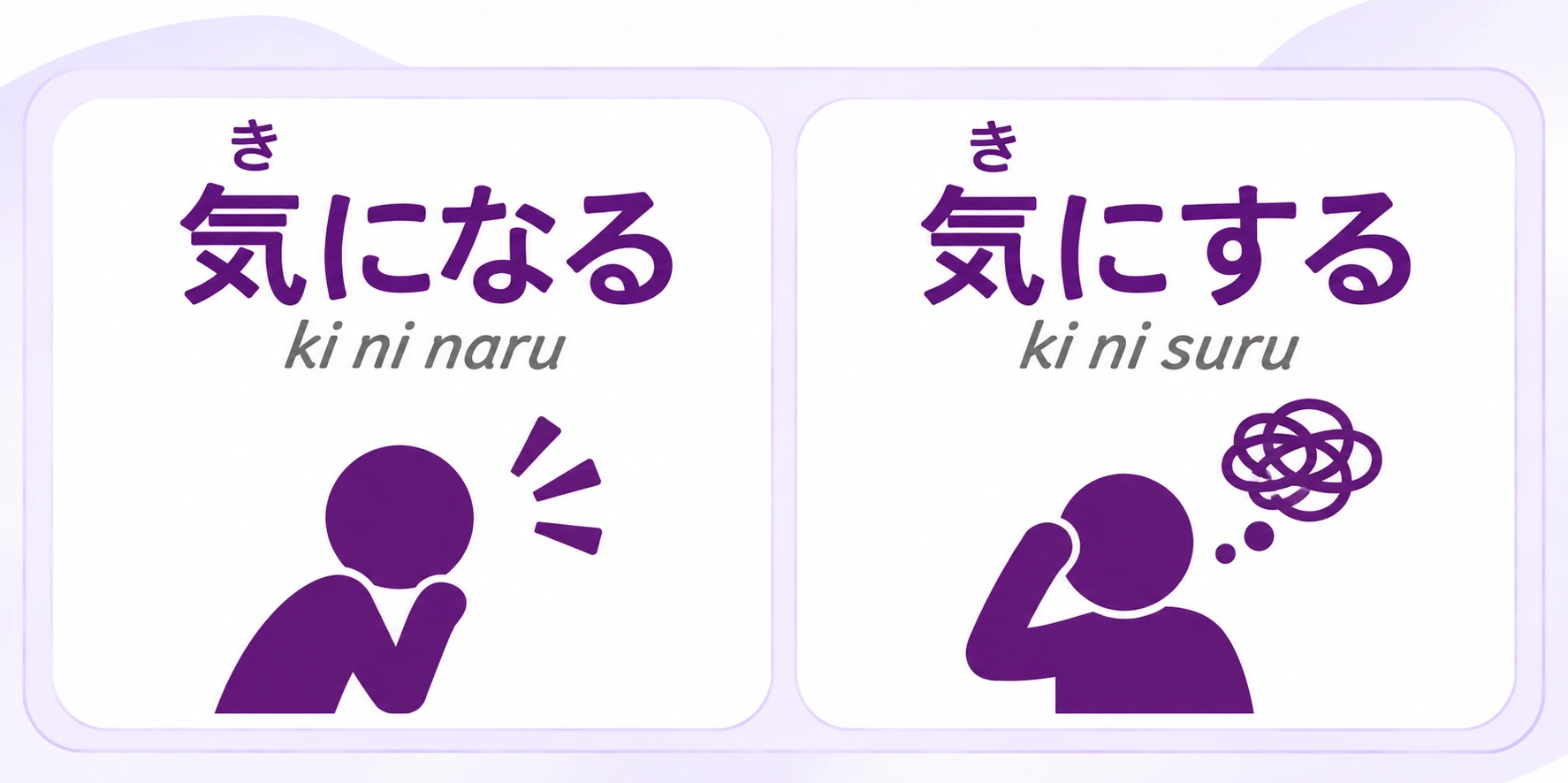
Quick Definition
Use ki ni naru when something catches your interest, concerns you, or stays on your mind. Use ki ni suru when someone pays attention to something, is mindful of it, or worries about it. The two often overlap when talking about concern, but ki ni naru also has common uses related to curiosity and attraction.
| Expression | Main idea | Example |
|---|---|---|
| 気になる ki ni naru |
Something catches your attention: curiosity, concern, or attraction. | あの映画が気になります。 I’m curious about that movie. |
| 気にする ki ni suru |
You pay attention to something, are mindful of it, or worry about it. | 小さなミスを気にしすぎています。 You’re worrying too much about a small mistake. |
Easy way to remember: Ki ni naru describes what catches your attention. Ki ni suru often focuses on how someone pays attention to it or is troubled by it. This is a useful guide, not an absolute rule.
When to Use Ki ni Naru
1. When something interests you
気になる (ki ni naru) is a natural way to say that something has caught your interest. You may want to learn more about it, visit it, or try it.
Situation: Two friends are talking about the movie Your Name.
A: 「君の名は。」って映画、見たことある?
"Kimi no Na wa." tte eiga, mita koto aru?
Have you seen the movie Your Name?
B: まだ。でも、友達がすごくよかったって言ってたから、前から気になってるんだ。
mada. demo, tomodachi ga sugoku yokatta tte itteta kara, mae kara ki ni natterun da.
Not yet. But a friend told me it was really good, so I've been wanting to see it for a while.
2. When something worries or bothers you
The same expression can describe a concern that stays on your mind, such as an exam result, an unusual sound, or an unanswered message.
Situation: Two friends are talking about the upcoming JLPT results.
A: JLPTの結果、来週発表だよね?
JLPT no kekka, raishuu happyou da yo ne?
The JLPT results come out next week, right?
B: そう。受かってるかどうか、気になるなあ。
sou. ukatteru ka dou ka, ki ni naru naa.
Yeah. I wonder if I passed.
3. When you may be interested in someone
If someone says あの人が気になる, it may suggest romantic interest. But it can also mean that the person is intriguing or that something about them is concerning. The context matters.
Situation: Two friends are talking about someone at work.
A: 最近、田中さんとよく話してるね。
saikin, Tanaka-san to yoku hanashiteru ne.
You’ve been talking with Tanaka a lot lately.
B: うん、ちょっと気になってるんだ。
un, chotto ki ni natterun da.
Yeah, I’m kind of interested in them.
When to Use Ki ni Suru
1. When you worry about what other people think
気にする (ki ni suru) often describes giving mental attention to something that concerns you. With 人の目を気にする, it means worrying about how others see you.
Situation: Two friends are talking about posting a photo on Instagram.
Vocabulary: リア充アピール (riajuu apiiru) means showing off how fun or fulfilling your life is, especially on social media.
A: さっき撮った写真、インスタに載せないの?
sakki totta shashin, insuta ni nosenai no?
Aren't you going to post the photo we just took on Instagram?
B: うーん、リア充アピールしてるって思われそうで……。つい人の目を気にしちゃうんだよね。
uun, riajuu apiiru shiteru tte omowaresou de... tsui hito no me o ki ni shichaun da yo ne.
Hmm, I'm worried people might think I'm showing off how great my life is. I can't help worrying about what others think.
2. When someone is thinking too much about a problem
Situation: Two coworkers are talking after a meeting.
A: まだ気にしてるの?誰も怒ってないし、大丈夫だよ。
mada ki ni shiteru no? dare mo okottenai shi, daijoubu da yo.
Are you still worrying about it? No one's upset, so it's okay.
B: うん。余計なこと言っちゃったかなって、ずっと引っかかってて。
un. yokei na koto icchatta kana tte, zutto hikkakattete.
Yeah. I keep thinking I might have said something I shouldn't have.
3. When you want to reassure someone: 気にしないで
気にしないで (ki ni shinaide) means “Don’t worry about it” or “Don’t let it bother you.” It is especially useful when someone apologizes for a minor inconvenience.
In more polite situations, use 気にしないでください (ki ni shinaide kudasai). A reassuring phrase uses ki ni suru, not ki ni naru.
Situation: A friend arrives a little late.
A: 遅れてごめん!
okurete gomen!
Sorry I’m late!
B: 気にしないで。大丈夫だよ。
ki ni shinaide. daijoubu da yo.
Don’t worry about it. It’s fine.
Ki ni Naru vs. Ki ni Suru: The Real Difference
Sometimes both expressions describe concern. The difference is what you emphasize: something catches your attention, or someone is giving it attention and worrying about it.
Example 1: Other people’s opinions
| Japanese | Natural English meaning | Focus |
|---|---|---|
| 周りの人の目が気になります。 mawari no hito no me ga ki ni narimasu. |
I feel self-conscious about how others see me. | Other people’s attention or judgment is on my mind. |
| 周りの人の目を気にします。 mawari no hito no me o ki ni shimasu. |
I worry about what other people think of me. | My tendency to pay attention to their judgment. |
Both sentences are natural. The meaning overlaps, but the focus is slightly different. Neither expression is automatically more polite than the other.
Example 2: A presentation at work
| Expression | What it suggests |
|---|---|
| みんなの反応が気になりました。 minna no hannou ga ki ni narimashita. |
I was wondering or concerned about everyone’s reaction. |
| みんなの反応を気にしすぎました。 minna no hannou o ki ni shisugimashita. |
I worried too much about everyone’s reaction. |
The second sentence emphasizes that the speaker gave the reactions too much attention. This is why ki ni suru is especially common with shisugiru (“to do too much”).
Grammar Tip: が vs. を
The most common patterns are easy to remember:
| Pattern | Example | Meaning |
|---|---|---|
| Noun + が + 気になる | 音が気になります。 oto ga ki ni narimasu. |
The noise bothers me / catches my attention. |
| Noun + を + 気にする | 音を気にしています。 oto o ki ni shite imasu. |
I’m bothered by or paying attention to the noise. |
が (ga) normally marks the thing that catches your attention with ki ni naru. を (o) normally marks the thing someone is concerned about with ki ni suru.
You will also hear 気になっている (ki ni natte iru, “has been on my mind”) and 気にしている (ki ni shite iru, “is concerned about”). Both describe an ongoing feeling or state.
To reassure someone, say 気にしないで, not 気にならないで. The negative form 気にならない means “it doesn’t bother me” or “I’m not curious,” rather than a standard request to stop worrying.
Natural Japanese Conversations
Here are two more everyday situations where these expressions sound natural.
Situation: Two friends are discussing a message that has not been answered.
A: 昨日メッセージを送ったけど、まだ返事がないんだ。
kinou messeeji o okutta kedo, mada henji ga nain da.
I sent a message yesterday, but I still haven’t gotten a reply.
B: それは気になるね。でも、忙しいだけかもしれないよ。
sore wa ki ni naru ne. demo, isogashii dake kamo shirenai yo.
That would be on my mind too. But maybe they’re just busy.
Situation: Two friends are having dessert.
A: 今日はケーキ食べないの?
kyou wa keeki tabenai no?
Aren't you having cake today?
B: うん、最近ちょっと糖分を気にしてて。
un, saikin chotto toubun o ki ni shitete.
No, I've been watching my sugar intake lately.
Mini Quiz: Ki ni Naru or Ki ni Suru?
Choose the best expression or particle for each situation. Open “Show Answer” to check.
Question 1
You saw a new café and want to try it. Which sentence sounds more natural?
- あのカフェが気になります。
ano kafe ga ki ni narimasu.
- あのカフェを気にします。
ano kafe o ki ni shimasu.
Show Answer
Answer: A. Ki ni naru naturally expresses curiosity or interest in visiting the café.
Question 2
A friend apologizes for being a little late. What is a natural, reassuring reply?
- 気にならないで。
ki ni naranaide.
- 気にしないで。
ki ni shinaide.
Show Answer
Answer: B. Ki ni shinaide is the standard way to say “Don’t worry about it.”
Question 3
Choose the correct particle.
小さなミス( )気にしすぎないで。
chiisana misu ( ) ki ni shisuginaide.
- が
- を
Show Answer
Answer: B. を Use を with ki ni suru and が with ki ni naru.
FAQ: Ki ni Naru and Ki ni Suru
Does ki ni naru always mean “I’m worried”?
No. It may mean you are curious, interested, concerned, or bothered. The context tells you which meaning is intended.
Can ki ni naru mean you like someone romantically?
Yes. あの人が気になる can suggest a growing romantic interest. However, it does not automatically mean love; the expression may simply describe curiosity or concern.
What does ki ni shinaide mean?
気にしないで means “Don’t worry about it” or “Don’t let it bother you.” The polite version is 気にしないでください.
What is the difference between ki ni naru and ki ni iru?
気になる means something catches your attention. 気に入る (ki ni iru) means you like something or are pleased with it. For example, この色が気に入りました means “I like this color.”
Which particles should I use with ki ni naru and ki ni suru?
The standard patterns are 〜が気になる (something catches your attention) and 〜を気にする (you pay attention to or worry about something).
Practice with Japonin (JOI) Teachers
Understanding the difference between ki ni naru and ki ni suru is a good start. Choosing the right expression naturally takes conversation practice.
In Japonin’s live online Japanese lessons, you can practice talking about your interests, worries, and everyday experiences with Japanese teachers.
Explore Japonin’s Japanese conversation lessons →
Start with 2 Free Trial Lessons
Japonin Deep Dive / Conversation Japanese
Japonin (JOI) has provided online Japanese lessons since 2006, helping learners around the world build practical communication skills.

Written by Chiho Kamioka Founder
In Japanese, even a small change from naru to suru can change what you communicate. Learning the difference can help you share your interests, express concern, and respond naturally to others.