そういえば vs. ちなみに (Sou Ieba vs. Chinamini)
Both そういえば (sou ieba) and ちなみに (chinamini) can sound like “by the way” in English. In Japanese, one signals that something just came to mind. The other adds or asks for a related detail.
Published:
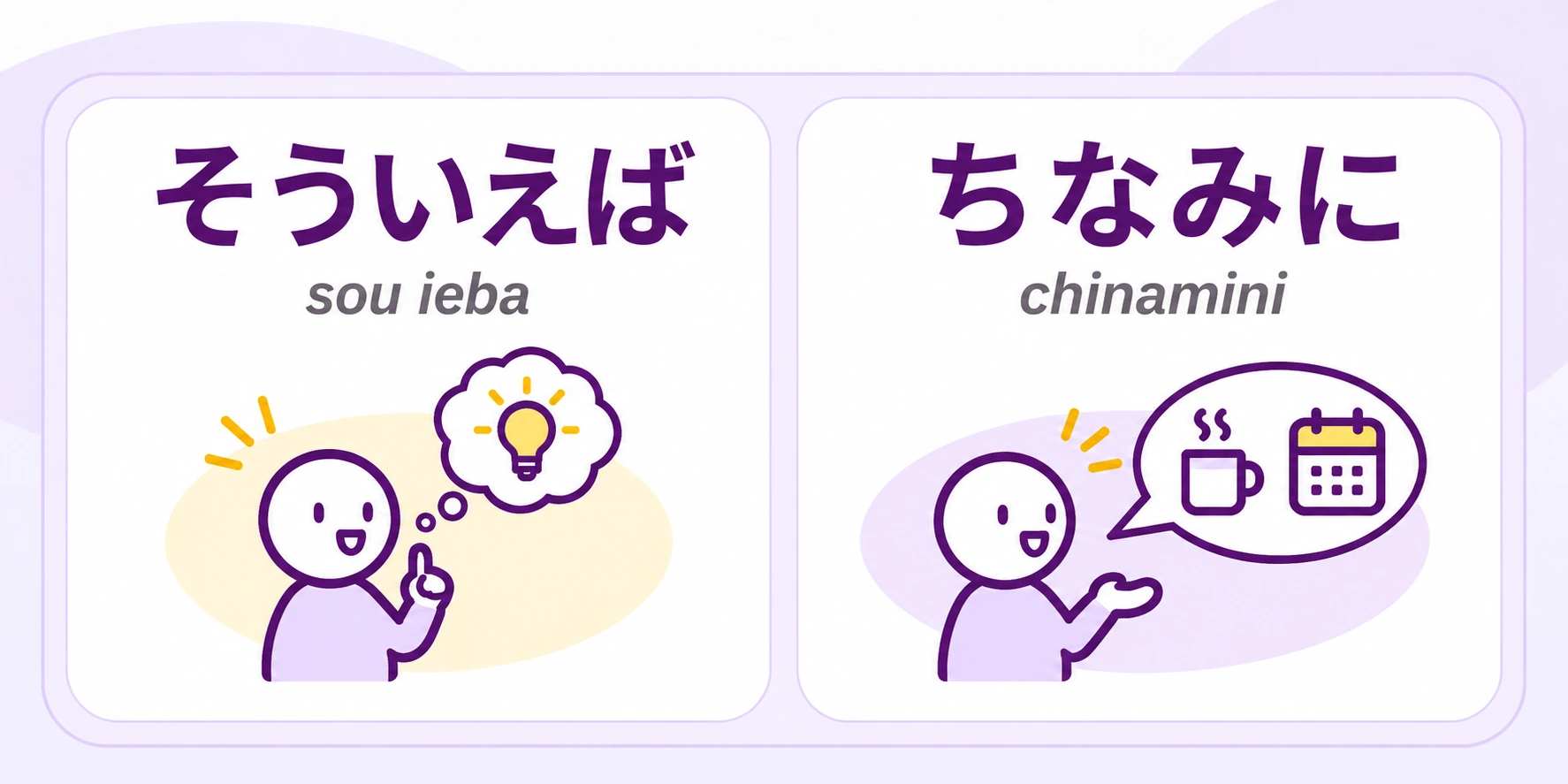
Quick Definition: そういえば (Sou Ieba) vs. ちなみに (Chinamini)
| Expression | Main idea | Example |
|---|---|---|
| そういえば sou ieba |
Bring up something that came to mind. | そういえば、鍵、返したっけ? Sou ieba, kagi, kaeshita kke? That reminds me, did I give you back the key? |
| ちなみに chinamini |
Add or ask for a related detail. | ちなみに、入場は無料です。 Chinamini, nyuujou wa muryou desu. By the way, admission is free. |
そういえば (Sou Ieba): Bring Up Something You Remembered
Use it when something comes to mind while you’re talking. You can bring up a detail you remembered, a question you meant to ask, or something you meant to mention.
Situation: Two colleagues are talking about lunch.
A: お昼、外に食べに行きます?
Ohiru, soto ni tabe ni ikimasu?
Want to go out for lunch?
B: いいですね。あ、そういえば、今日は1時から会議でしたよね。
Ii desu ne. A, sou ieba, kyou wa ichiji kara kaigi deshita yo ne.
Sounds good. Oh, that reminds me, we have a meeting at one today, right?
A: そうでしたね。じゃあ、近いところにしましょうか。
Sou deshita ne. Jaa, chikai tokoro ni shimashou ka.
Right. Shall we go somewhere nearby?
ちなみに (Chinamini): Add a Related Detail
Use it to add a detail that connects to the current topic, or to ask for one more piece of information about it.
Situation: Two friends are talking about a restaurant.
A: 昨日、駅前にできたイタリアンに行ってきたよ。
Kinou, ekimae ni dekita itarian ni itte kita yo.
I went to that new Italian restaurant near the station yesterday.
B: どうだった?
Dou datta?
How was it?
A: おいしかったよ。ちなみに、ランチは1,000円だったよ。
Oishikatta yo. Chinamini, ranchi wa sen en datta yo.
It was good. By the way, lunch was 1,000 yen.
B: えっ、安いね!今度行ってみよう。
E, yasui ne! Kondo itte miyou.
Really? That’s cheap! I’ll have to try it sometime.
Here, ちなみに introduces an extra detail about the restaurant: the price of lunch. You can also use it to ask a follow-up question, as in the next conversation.
Situation: Two colleagues are discussing a workshop.
A: 来週の研修、オンラインでも参加できますよ。
Raishuu no kenshuu, onrain demo sanka dekimasu yo.
You can join next week’s training online too.
B: あ、それなら参加できそうです。ちなみに、何時からですか。
A, sore nara sanka dekisou desu. Chinamini, nanji kara desu ka.
Oh, then I think I can make it. By the way, what time does it start?
A: 10時です。リンク、あとで送りますね。
Juuji desu. Rinku, ato de okurimasu ne.
Ten. I’ll send you the link later.
そういえば (Sou Ieba) vs. ちなみに (Chinamini): Same Sentence, Different Nuance
Situation: Two friends are talking about a café that recently moved.
A: あのカフェ、駅前に移転したんだって。
Ano kafe, ekimae ni iten shitan datte.
I heard that café moved to a spot by the station.
B: へえ。今度行ってみようかな。
Hee. Kondo itte miyou kana.
Oh, maybe I’ll check it out sometime.
Two possible ways to continue
ちなみに (Chinamini)
A: ちなみに、日曜もやってるよ。
Chinamini, nichiyou mo yatteru yo.
By the way, it’s open on Sundays too.
A is adding a useful detail about the café.
そういえば (Sou Ieba)
A: そういえば、日曜もやってるよ。
Sou ieba, nichiyou mo yatteru yo.
Oh, that reminds me. It’s open on Sundays too.
A has just remembered that the café is open on Sundays.
Both sentences sound natural here. The information is the same. What changes is how the speaker introduces it.
Mini Quiz: そういえば (Sou Ieba) or ちなみに (Chinamini)
Choose the expression that best matches the speaker’s intention. Open “Show Answer” to check.
Question 1
A friend mentions a book. That jogs your memory: you still have their copy. Which phrase tells your friend you just remembered?
- そういえば (sou ieba)
- ちなみに (chinamini)
Show Answer
Answer: A. そういえば signals that the thought has just come to mind.
Question 2
You give a visitor directions to a museum, then add a useful detail: it’s free on Tuesdays. Which phrase frames it as extra information?
- そういえば (sou ieba)
- ちなみに (chinamini)
Show Answer
Answer: B. ちなみに adds a detail about the museum without changing the subject.
Question 3
Complete the conversation. B suddenly remembers that they have not returned a friend’s umbrella.
A: 明日も雨みたいだね。
Ashita mo ame mitai da ne.
Looks like it’s going to rain tomorrow too.
B: あ、( )、この前借りた傘、まだ返してなかったね。
A, ( ), kono mae karita kasa, mada kaeshite nakatta ne.
- そういえば (sou ieba)
- ちなみに (chinamini)
Show Answer
Answer: A. そういえば is the natural choice because talking about the rain has reminded B about the umbrella.
Oh, that reminds me. I still haven’t given you back the umbrella I borrowed the other day, have I?
FAQ
Can I use そういえば (sou ieba) if nothing in the conversation reminded me?
Yes. A thought can come to mind on its own. The phrase tells the listener how you’re bringing it up, not necessarily what prompted it.
Can I use ちなみに (chinamini) in a work email?
Yes, when you are adding a related aside. If the detail is the main reason for writing, such as a deadline the reader must meet, state it directly rather than making it sound like an extra note.
Can I use either そういえば (sou ieba) or ちなみに (chinamini) in the same situation?
Yes. Sometimes both expressions sound natural, but they communicate different things about the speaker’s intention. そういえば suggests that something has come to mind, while ちなみに presents it as additional information related to the topic.
Practice with Japonin (JOI) Teachers
In a live Japonin lesson, try picking up a detail that comes to mind or asking one more question as the conversation unfolds.
Explore Japonin’s Japanese conversation lessons →
Start with 2 Free Trial Lessons
Japonin Deep Dive / Conversation Japanese
Japonin (JOI) has provided online Japanese lessons since 2006, helping learners around the world build practical communication skills.

Chiho Kamioka Founder
Small expressions can change how a conversation flows. Try noticing not just what comes next, but how the speaker introduces it.