Haiku is a style of Japanese poetry that has become popular all over the world. There are many innovations occurring in this field of Japanese culture as it modernizes and meets modern convenient technology.
This Japanese teacher’s blog by MIZUNO Momoyo sensei is a great way to study natural Japanese expressions. You can read, listen, and learn useful vocabulary from a short essay written in everyday Japanese.
▶What You’ll Learn
Read Natural Japanese in Context:Photo haiku
写真俳句
俳句は17音だけで自然の一場面を詩にします。季語はその句の季節を表す大切な言葉です。 とはいえ、った17音で見たこと感じたことをうまく表現するのは本当に難しいものです。 もし、俳句といっしょに写真があったら、どうでしょう。
今、携帯やデジカメで写真を撮り、俳句といっしょに投稿するサイトが人気だそうです。毎日の生活を書き留めるものや新しい現代アートを目指すものなど、色々なタイプの写真俳句があります。
私が作った俳句を写真といっしょに3つご紹介します。(ただし、写真は自作ではありません。) みなさんも、写真といっしょにぜひ作ってみてください。
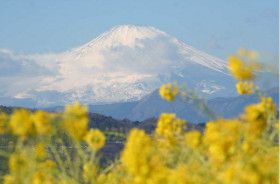
◆甲斐嶺(かいがね)を 仰(あお)ぎ菜花(なばな)は 豊(ゆた)かなり
Rape blossoms feel so satisfied, Looking up at a snow-capped Mt. Fuji
<この句(く)の語彙(ごい)>
甲斐嶺(かいがね):富士山(ふじさん)の古(ふる)い呼(よ)び方(かた) an old name for Mt. Fuji (lit. peak)
仰(あお)ぐ:見上(みあ)げる、尊敬(そんけい)する to look up to, respect
菜花(なばな):菜(な)の花(はな)、rape blossoms <春(はる)の季語(きご) a seasonal word>
豊(ゆた)か:満足(まんぞく)している様子(ようす)を表す古い言葉。 abundant
なり:~である to be or is
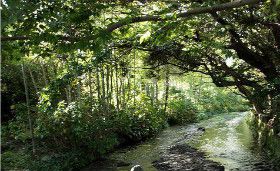
◆午後(ごご)の瀬(せ)に ゆるりとシジミ 太(ふと)りけり
In the shallows on a spring afternoon, The shellfish has grown large, Because it feels relaxed in the warmer waters
<この句(く)の語彙(ごい)>
瀬(せ):shallow, ford
ゆるりと:ゆっくりと、くつろいで(= feeling relaxed)
シジミ(蜆):freshwater shellfish <春(はる)の季語(きご)>
太(ふと)りけり:太りました
◆不機嫌(ふきげん)で 心(うら)探(さぐ)る恋(こい) 土手(どて)涼(すず)み
Pretending to be surly, She sounds out his heart, On the breezy bank

<この句(く)の語彙(ごい)>
不機嫌(ふきげん):surly, ill-tempered
心(うら):「こころ、気持(きも)ち」の古(ふる)い言(い)い方(かた)。
探(さぐ)る:to sound, to feel out
土手(どて)涼(すず)み:土手で、風(かぜ)に吹(ふ)かれて涼(すず)むこと<夏(なつ)の季語(きご)>
*土手(どて):bank
*涼(すず)む:to keep oneself cool
Learn Japanese Listening with Video Lesson
Watch MIZUNO Momoyo sensei read this blog with clear native pronunciation and improve your Japanese listening skills.
Learn Japanese Kanji with Furigana Reading Help
写真俳句
俳句は17音だけで自然の一場面を詩にします。季語はその句の季節を表す大切な言葉です。とはいえ、たった17音で見たこと感じたことをうまく表現するのは本当に難しいものです。もし、俳句といっしょに写真があったら、どうでしょう。
今、携帯やデジカメで写真を撮り、俳句といっしょに投稿するサイトが人気だそうです。毎日の生活を書き留めるものや新しい現代アートを目指すものなど、いろいろなタイプの写真俳句があります。
私が作った句を写真といっしょに3つご紹介します。(ただし、写真は自作ではありません。) みなさんも、写真といっしょにぜひ作ってみてください。
English Translation for Understanding
Haiku is where one scene of nature is depicted in a poem using just 17 syllables. Seasonal words are a very important part as they indicate the season within the poem. However, it is difficult to express what you see in only 17 syllables. But what if a haiku were paired with a photo, how about then ?
Now taking pictures by a camera phone or digital camera and sharing them on web sites along with a matching haiku is apparently popular. There are many types of 'photo haiku', from things written down during every day life, to those that aim to be new forms of modern art.
I will introduce 3 haiku that I wrote along with photographs. (The photos are not, however, my own work). Please try to write some 'photo haiku' of your own.
This Week’s Key Vocabulary
俳句・句:haiku,
自然:nature
一場面:one scene
詩: poem
季語:季節を表すために決められた言葉 Season word
とはいえ:though
表現する:to express
投稿する:to contribute
日常:one’s daily life
サイト:web site
書き留める:to write down
現代アート:modern art
自作:(something)of one’s own work
Meet the Teacher

Japanese Language Teacher
Join a live Japanese class and start learning with our teachers today!