There are many Japanese customs that seem to be rooted in puns on words. The custom of giving Japanese buckwheat soba noodles to new neighbors is one such traditional Japanese custom. Chiba sensei has just recently moved and relates the history behind this old Japanese tradition.
This Japanese teacher’s blog by CHIBA Sakie sensei is a great way to study natural Japanese expressions. You can read, listen, and learn useful vocabulary from a short essay written in everyday Japanese.
▶What You’ll Learn
Read Natural Japanese in Context:Japanese buckwheat soba noodles
引っ越しそば
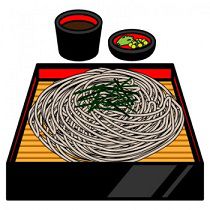
皆さんの中にはご存知の方もいらっしゃると思いますが、私は最近引っ越しをしました。 引っ越しと言えば、皆さんの国では引っ越しをするとき近所の人に挨拶として何かをあげますか。日本では最近、近所の人との関係が希薄化し、何も挨拶をしないことも多いのですが、伝統的に「引っ越しそば」といって、新しい近所の人にそばをあげる慣習があります。さて、どうしてお餅やうどんではなく、「そば」なのでしょうか。
インターネットの情報によると、引っ越しの挨拶としてそばを配るようになったのは江戸時代中期だそうです。それまでは小豆を使った粥やお餅を配っていたようですが、その当時小豆は高かったので安いそばを配るようになったそうです。「そば(側)」は日本語で「近く」の意味ですから、「あなたの『そば』に長くいたいので、どうぞよろしく」という意味でそばを配るようになったという説もあるそうですが、それは後でつけられた話だそうです。単純に、安くておいしくてみんなが大好きだから引っ越しそばの慣習ができたのですね。
皆さんも引っ越しのときは近所の人にそばを配ってみたらいかがですか。近所の人と仲良くなれるかもしれませんよ。または、プロポーズのときに「ずっとそばにいてください♡」とそばをあげるのも面白いかもしれませんね!
Learn Japanese Listening with Video Lesson
Watch CHIBA Sakie sensei read this blog with clear native pronunciation and improve your Japanese listening skills.
Learn Japanese Kanji with Furigana Reading Help
引っ越しそば
皆さんの中にはご存知(ぞんじ)の方もいらっしゃると思いますが、私は最近引っ越しをしました。 引っ越しと言えば、皆さんの国では引っ越しをするとき近所の人に挨拶として何かをあげますか。日本では最近、近所の人との関係が希薄化し、何も挨拶をしないことも多いのですが、伝統的に「引っ越しそば」といって、新しい近所の人にそばをあげる慣習があります。さて、どうしてお餅やうどんではなく、「そば」なのでしょうか。
インターネットの情報によると、引っ越しの挨拶としてそばを配るようになったのは江戸時代中期だそうです。それまでは小豆を使った粥やお餅を配っていたようですが、その当時小豆は高かったので安いそばを配るようになったそうです。「そば(側)」は日本語で「近く」 の意味ですから、「あなたの『そば』に長くいたいので、どうぞよろしく」という意味でそばを配るようになったという説もあるそうですが、それは後でつけられた話だそうです。単純に、安くておいしくてみんなが大好きだから引っ越しそばの慣習ができたのですね。
皆さんも引っ越しのときは近所の人にそばを配ってみたらいかがですか。近所の人と仲良くなれるかもしれませんよ。または、プロポーズのときに「ずっとそばにいてください♡」とそばをあげるのも面白いかもしれませんね!
English Translation for Understanding
Japanese buckwheat soba noodles
“Hikkoshi(moving in) Soba(Japanese buckwheat noodles)” (buckwheat noodles presented to neighbors by a person who has just moved in) I suppose some of you may know that I moved recently. Speaking of moving, do you give anything to your neighbour as a greeting in your country? In Japan, since the relationships among neighbours are getting weaker, a lot of people do not greet each other at all. However, we traditionally have a custom, called “Hikkoshi(moving in) Soba(Japanese buckwheat noodles)”,in which we give soba to new neighbours. Then, why is it not mochi rice cake or udon, but soba?
According to information on the internet, it is said that it was in the middle of the Edo period that people started to give out soba as a moving in greeting. Before that it appears that adzuki beans porridge or mochi rice cake were given, but adzuki beans were expensive in those days, so people started to distribute cheap soba. “soba” means “close” in Japanese, so there is a view that people started to give out soba as a meaning of “I’d like to be close to you for long time, so please treat me kindly”, but it seems this story was added afterwards. Simply, this custom was made because soba was cheap, tasty and everybody loved it.
When you move to a new place, why don’t you give soba to your new neighbors? You might be able to get on well with your new neighbors. Or it would be interesting if you gave soba when you proposed to someone, adding “please be “soba”(close) to me forever”.
This Week’s Key Vocabulary
ご存知 / ごぞんじ : knowing
引っ越し / ひっこし : moving (dwelling, office, etc.)
として : as
伝統的 / でんとうてき : adj-na 1)traditional 2)conventional
餅 / もち : sticky rice cake
最近 / さいきん : these days; recently; nowadays
近所 / きんじょ : neighbourhood
挨拶 / あいさつ : greeting
希薄 / きはく : adj-na n 1 1)thin (e.g. air) 2)diluted 3)sparse 4)lean 5)weak 6) rarified 7)rarefied 2 8)lacking (e.g. empathy) 9)deficient
慣習 / かんしゅう : usual (historical) custom
さて :1)well 2)now 3)then
配る / くばる : 1)to distribute 2)to deliver 3)to deal (cards)
小豆 / あずき : adzuki beans
粥 / かゆ : porridge
説 / せつ : n n-suf 1)theory 2)doctrine n 3)opinion 4)view
単純に/たんじゅんに:simply
Meet the Teacher

Japanese Language Teacher
Join a live Japanese class and start learning with our teachers today!