と (to) vs や (ya): What’s the Difference?
Not sure whether to use と (to) or や (ya)? Both connect nouns in a list, but they are used differently. Learn which one to choose with simple examples and a real conversation.
Written by Chiho Kamioka ·
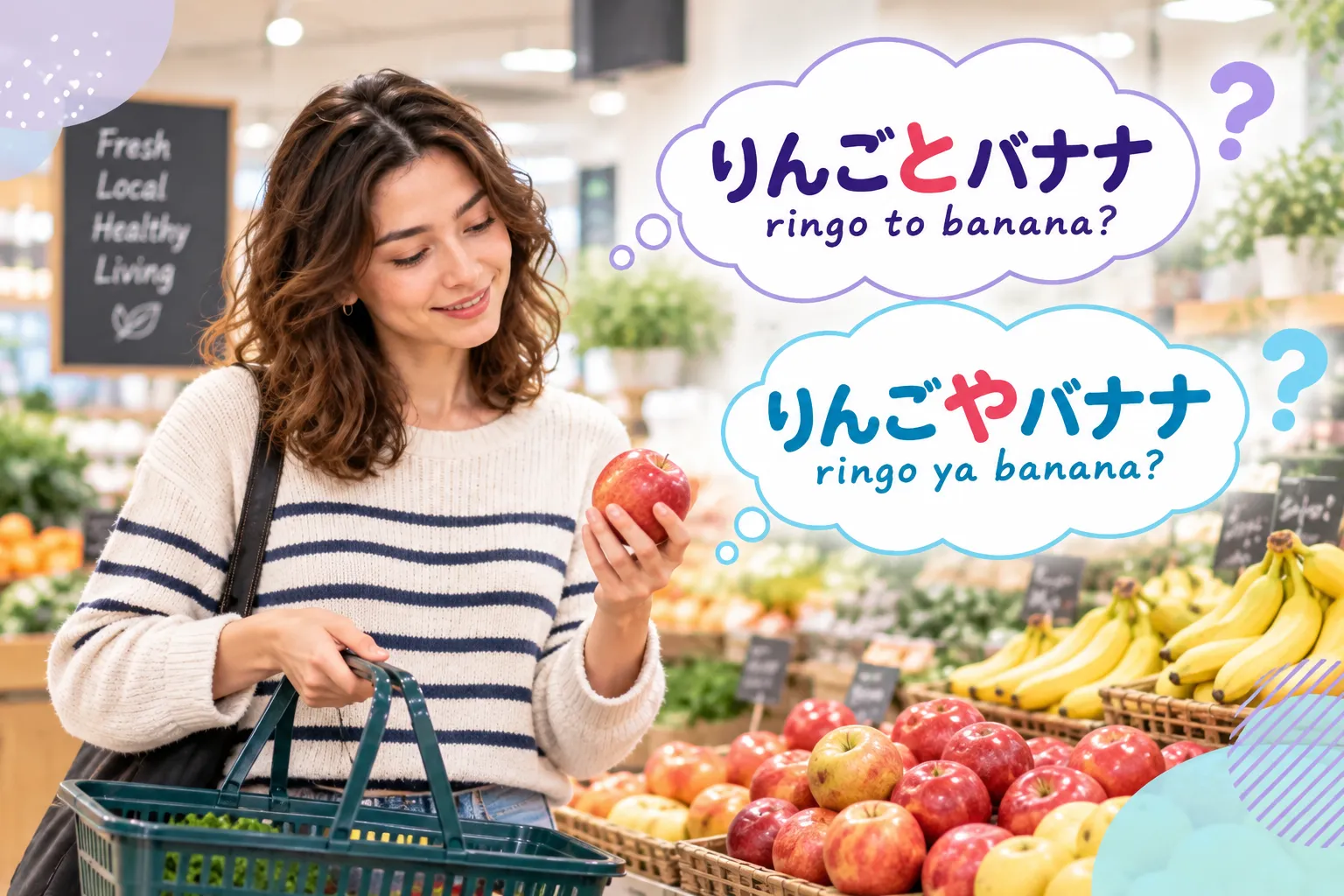
What Is the Difference Between と (to) and や (ya)?
Look at these two sentences:
りんごとバナナを買いました。
ringo to banana o kaimashita.
I bought apples and bananas.
りんごやバナナを買いました。
ringo ya banana o kaimashita.
I bought things like apples and bananas.
Both sentences mention apples and bananas. With と, you name A and B. With や, A and B are examples, and there may be more.
と = A and B
Name A and B together.
や = things like A and B
A and B are examples. There may be more.
Basic Sentence Pattern
Put と or や after the first noun to connect it to the next noun.
Noun + と + Noun
りんご と バナナ
Noun + や + Noun
りんご や バナナ
Connecting Three or More Nouns with と (to)
You can use と more than once when you want to name three or more things.
パンと卵とヨーグルトを食べました。
pan to tamago to yooguruto o tabemashita.
I ate bread, eggs, and yogurt.
When Do We Use と (to)?
Use と when you want to name A and B together. It works like “and” in English.
パンと卵を食べました。
pan to tamago o tabemashita.
I ate bread and eggs.
コーヒーとケーキを注文しました。
koohii to keeki o chuumon shimashita.
I ordered coffee and cake.
土曜日と日曜日は休みです。
doyoubi to nichiyoubi wa yasumi desu.
Saturday and Sunday are my days off.
In these sentences, と simply connects the things you name.
When Do We Use や (ya)?
Use や when you want to give examples.
The things you name are part of the list. There may be other things too.
パンや卵を食べました。
pan ya tamago o tabemashita.
I ate things like bread and eggs.
スーパーで牛乳や野菜を買いました。
suupaa de gyuunyuu ya yasai o kaimashita.
I bought things like milk and vegetables at the supermarket.
休みの日は映画やドラマを見ます。
yasumi no hi wa eiga ya dorama o mimasu.
On my days off, I watch things like movies and dramas.
When you hear や, remember: there may be more.
Be careful: や does not mean “or.”
や gives examples. To say “A or B,” Japanese usually uses か (ka).
コーヒーかお茶
koohii ka ocha
coffee or tea
と (to) and や (ya) in a Real Conversation
Here is a simple conversation after a shopping trip.
A: スーパーで何を買いましたか。
B: 牛乳やパンを買いました。
A: 果物も買いましたか。
B: はい、りんごとバナナを買いました。
Why does B use two different particles?
In 牛乳やパン, milk and bread are examples of what B bought. Later, we learn that B bought fruit too.
In りんごとバナナ, they are now talking about fruit. B names apples and bananas together.
An Easy Way to Remember と (to) and や (ya)
と = A and B
Name A and B together.
や = Things like A and B
A and B are examples. There may be more.
Practice Japanese Particles in Real Conversations
Particles become easier to understand when you see them in real sentences and conversations.
In Japonin lessons, you can practice using Japanese while talking about your own experiences and ideas. Experienced Japanese teachers will help you use Japanese more naturally.

Japanese と (to) vs や (ya): FAQ
Since 2006, Japonin has helped over 6,000 learners worldwide study Japanese online with support from experienced Japanese language teachers.

Written by Chiho KamiokaFounder of Japonin
Japanese particles become easier to understand when you compare them in the same situation. Remember: と names A and B together, while や gives examples, and there may be more.
Ready to improve your Japanese?
Study Japanese with experienced teachers at Japonin.
Try two 50-minute live lessons and take the next step in your Japanese learning.
More Beginner Japanese Particle Guides
Explore more Japonin guides to understand common Japanese particles and how their meanings change in real sentences.
See all Beginner Particle Comparisons →