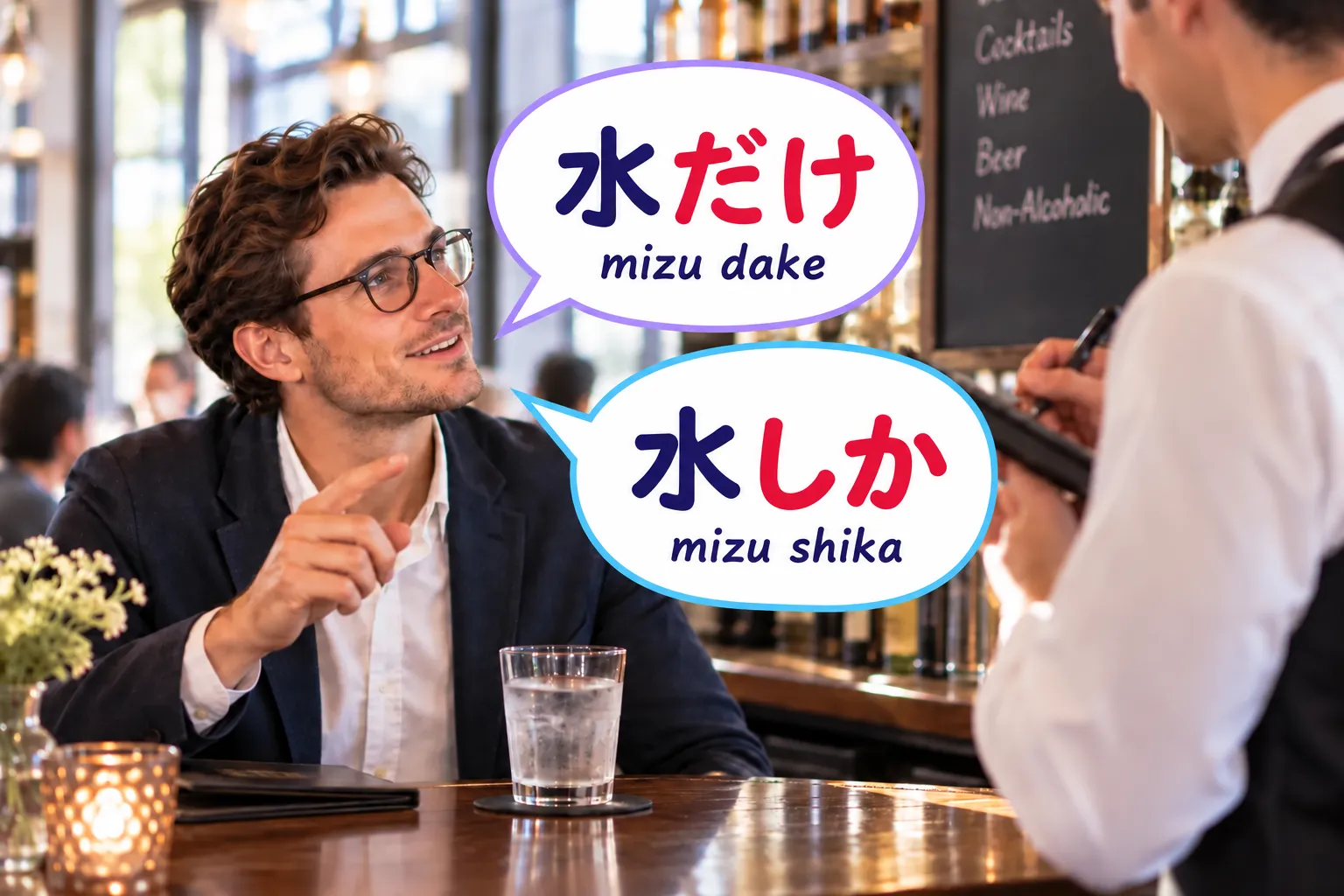
まで (made) vs までに (made ni): Until vs By in Japanese
Not sure whether to use まで (made) or までに (made ni)? When talking about time, a simple way to start is: まで = until, while までに = by. The important difference is whether something continues up to a time, or happens by that time.
Written by Chiho Kamioka ·

Why Are まで (made) and までに (made ni) Easy to Confuse?
Both expressions can show a limit in time, but they do not mean the same thing. Look at these two sentences.
5時まで働きます。
goji made hatarakimasu.
I will work until 5.
5時までに帰ります。
goji made ni kaerimasu.
I will be home by 5.
In the first sentence, working continues until 5. In the second, I will arrive home before 5 or at 5.
The Simple Difference: Until vs By
まで (made): Until
Use まで when an action or situation continues up to a certain time.
10時まで勉強します。
juuji made benkyou shimasu.
I will study until 10.
までに (made ni): By
Use までに to say that something happens or is finished at or before a certain time.
10時までに宿題を出します。
juuji made ni shukudai o dashimasu.
I will submit my homework by 10.
Easy check:
Does the action continue until that time? → まで
Does the action happen by that time? → までに
When Do We Use まで (made)?
Use まで when an action or situation continues up to an end point.
6時まで働きます。
rokuji made hatarakimasu.
I work until 6.
ここで5時まで待ちます。
koko de goji made machimasu.
I will wait here until 5.
お店は9時まで開いています。
omise wa kuji made aiteimasu.
The store is open until 9.
In these examples, working, waiting, or being open continues for a period of time. まで shows where that period ends.
Note: まで can also show an end point in place, not only time.
駅まで歩きます。 = I will walk to the station.
When Do We Use までに (made ni)?
Use までに when something happens at or before a certain time. This does not mean that the action continues until that time.
5時までに帰ります。
goji made ni kaerimasu.
I will be home by 5.
金曜日までにレポートを出してください。
kinyoubi made ni repooto o dashite kudasai.
Please submit the report by Friday.
来週までに決めます。
raishuu made ni kimemasu.
I will decide by next week.
You can think of までに as setting a time limit: the action happens no later than that point.
Same Verb, Different Meaning
Some verbs can be used with both まで and までに, but the meaning changes. For example, 寝ます can mean “sleep” or “go to bed.”
9時まで寝ます
9時まで寝ます。
kuji made nemasu.
I will sleep until 9.
Sleeping continues up to 9.
9時までに寝ます
9時までに寝ます。
kuji made ni nemasu.
I will go to bed by 9.
Going to bed happens before or at 9.
So do not look only at the verb. Think about the meaning of the sentence: Does the action continue, or does it happen by a certain time?
What Is the Difference Between までに and に?
に can show a specific time, while までに means “by” that time.
5時にレポートを出します。
goji ni repooto o dashimasu.
I will submit the report at 5.
I will submit it at 5.
5時までにレポートを出します。
goji made ni repooto o dashimasu.
I will submit the report by 5.
I will submit it before 5 or at 5.
まで and までに in a Real Conversation
Here is a simple conversation at work.
A: レポートはいつまでに出せばいいですか。
B: 金曜日までに出してください。
A: わかりました。今日は何時までオフィスにいますか。
B: 6時までいます。
Why do they use both?
The report should be submitted by Friday, so the speaker uses までに.
Being in the office continues until 6, so the speaker uses まで.
Mini Quiz: まで or までに?
Choose まで or までに to match the English meaning.
Q1. 図書館は8時( )開いています。
“The library is open until 8.”
Show Answer
Answer: まで
The library stays open until 8.
Q2. 金曜日( )宿題を出してください。
“Please submit your homework by Friday.”
Show Answer
Answer: までに
The homework should be submitted by Friday.
Q3. 明日は10時( )寝ます。
“I will sleep until 10 tomorrow.”
Show Answer
Answer: まで
Sleeping continues until 10.
Q4. 今日は10時( )寝てください。
“Please go to bed by 10 today.”
Show Answer
Answer: までに
Going to bed should happen at or before 10.
Practice Japanese Grammar in Real Conversations
Grammar becomes easier to understand when you see how it changes the meaning of real sentences.
In Japonin lessons, you can practice using Japanese while talking about your own experiences and ideas. Experienced Japanese teachers will help you use Japanese more naturally.

Japanese まで vs までに: FAQ
Since 2006, Japonin has helped over 6,000 learners worldwide study Japanese online with support from experienced Japanese language teachers.

Written by Chiho Kamioka Founder of Japonin
When learning まで and までに, try not to memorize them only as “until” and “by.” Think about what is happening in the sentence: does something continue up to that time, or happen by that time? Comparing the two in the same situation makes the difference much easier to understand.
Ready to improve your Japanese?
Study Japanese with experienced teachers at Japonin.
Try two 50-minute live lessons and take the next step in your Japanese learning.
More Beginner Japanese Particle Guides
Explore more Japonin guides to understand common Japanese particles and how their meanings change in real sentences.
See all Beginner Particle Comparisons →