Japanese Particle Comparisons for Beginners
Japanese particles are small words, but changing one can change the meaning of a sentence. This page brings together beginner-friendly particle comparisons, with simple examples to help you choose the right one.
Written by Chiho Kamioka ·
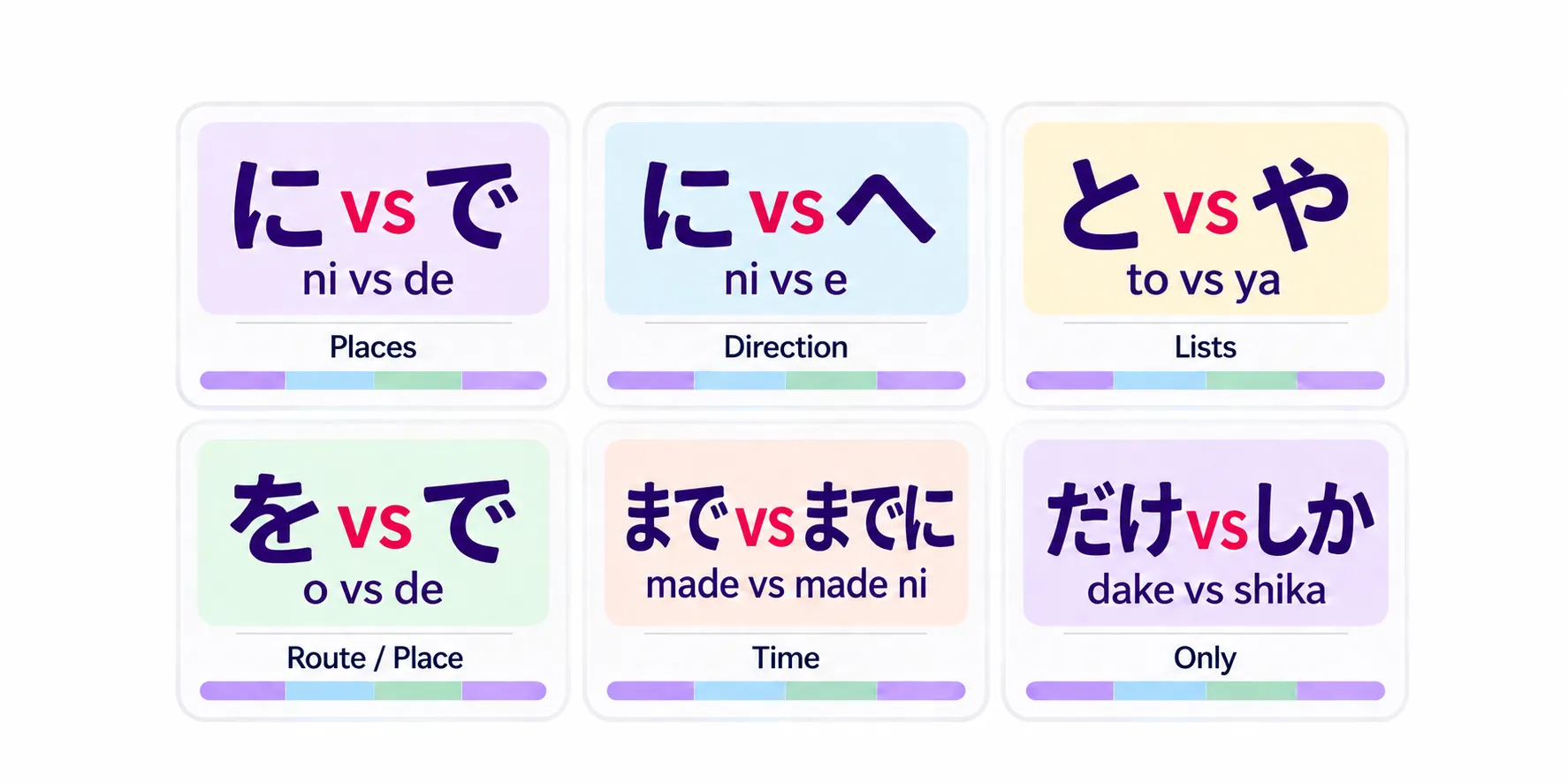
Why Are Japanese Particles So Confusing?
Japanese particles such as に, で, を, and と come after words and help show how those words work in a sentence.
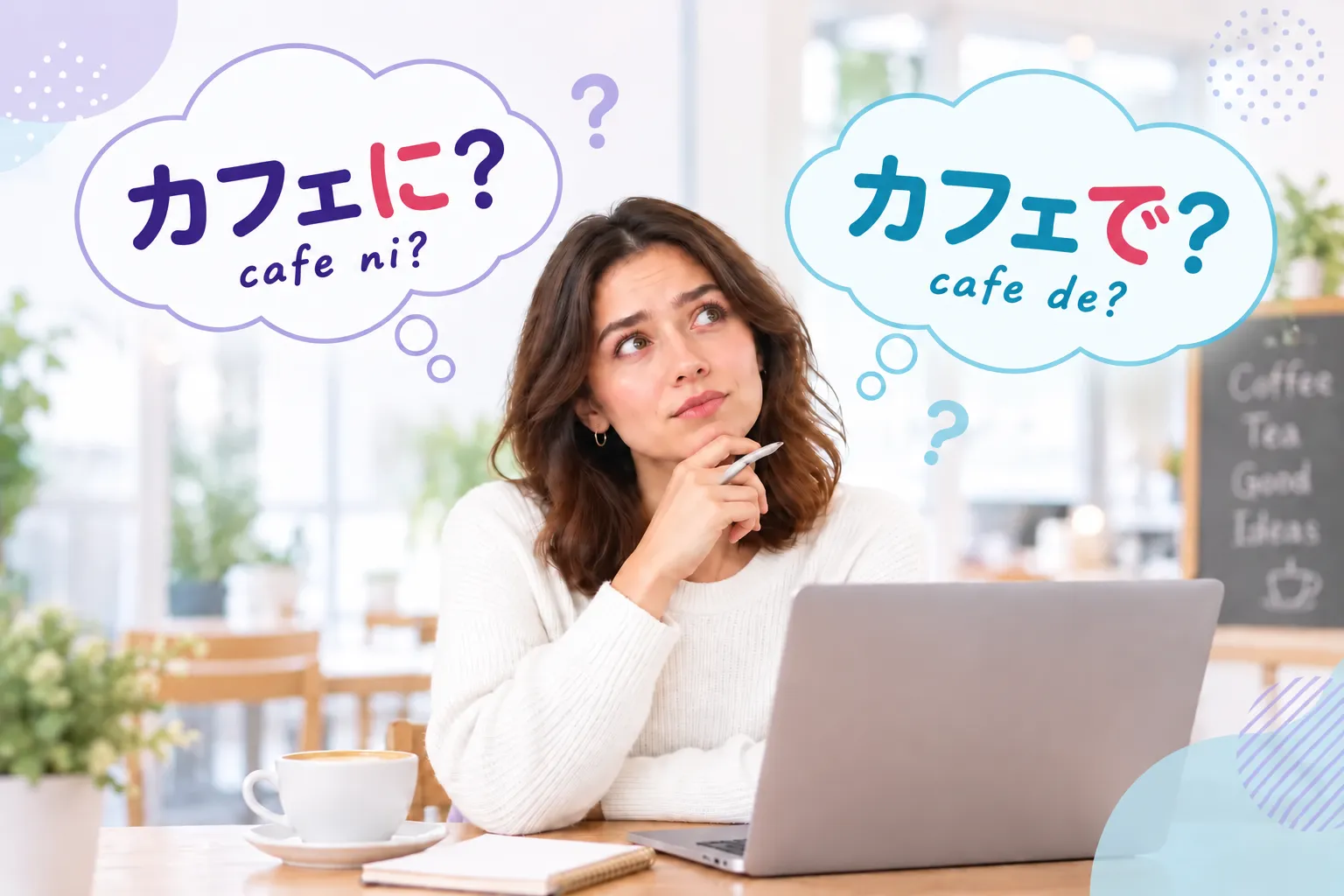
The difficult part is that two particles can sometimes appear in very similar sentences, but the meaning changes.
学校に行きます。
I go to school.
学校で勉強します。
I study at school.
Instead of memorizing long grammar rules, it is often easier to compare two similar patterns and see what changes. The guides below focus on common differences that beginner learners often find confusing.
Which Particle Guide Do You Need?
Start with the question that sounds closest to yours.
Particles for Places and Movement
Many beginner particle questions are about places: where you are going, where something happens, or which place you move through.


Particles for Lists: と vs や
と (to) vs や (ya): What’s the Difference?
Both connect nouns. と means “and” and names the items on your list. や gives examples, like “A, B, and other things.”
りんごとバナナ
apples and bananas
りんごやバナナ
things like apples and bananas
Particles for Time: まで vs までに
まで (made) vs までに (made ni): Until vs By
Use まで when an action or situation continues until a certain time. Use までに when something happens by that time.
5時まで働きます。
I will work until 5.
5時までに帰ります。
I will be home by 5.
Two Ways to Say “Only”: だけ vs しか
だけ (dake) vs しか (shika): How to Say “Only” in Japanese
Both can mean “only.” だけ can be used with positive or negative forms, while しか is used with a negative form.
水だけ飲みます。
I only drink water.
水しか飲みません。
I don’t drink anything except water.
How to Learn Japanese Particles
Particles become easier when you learn them inside sentences rather than as single-word translations.
Look at the verb
For place particles such as に, で, and を, the verb often helps you choose the right particle.
Compare similar sentences
Seeing two similar sentences side by side makes small differences much easier to notice.
Practice with your own examples
Try changing the place, time, person, or object in the example sentence to make it about your own life.
Practice Japanese Particles in Real Conversations
Particles become much easier to understand when you use them in real sentences and conversations.
In Japonin lessons, you can practice Japanese using your own experiences and ideas, with support from experienced Japanese teachers.

Japanese Particles for Beginners: FAQ
Since 2006, Japonin has helped over 6,000 learners worldwide study Japanese online with support from experienced Japanese language teachers.

Written by Chiho Kamioka Founder of Japonin
Particles are often easier to understand when you compare two similar sentences instead of memorizing a rule by itself. These guides were created to help beginner learners see the difference clearly and use Japanese with more confidence.
Ready to improve your Japanese?
Study Japanese with experienced teachers at Japonin.
Try two 50-minute live lessons and take the next step in your Japanese learning.