だけ (dake) vs しか (shika): How to Say “Only” in Japanese
Both だけ (dake) and しか (shika) can mean “only,” but they are not used in the same way. だけ can be used with positive or negative forms. しか is used with a negative form. Let’s see how the meaning and feeling can be different.
Written by Chiho Kamioka ·
Why Can Both だけ and しか Mean “Only”?
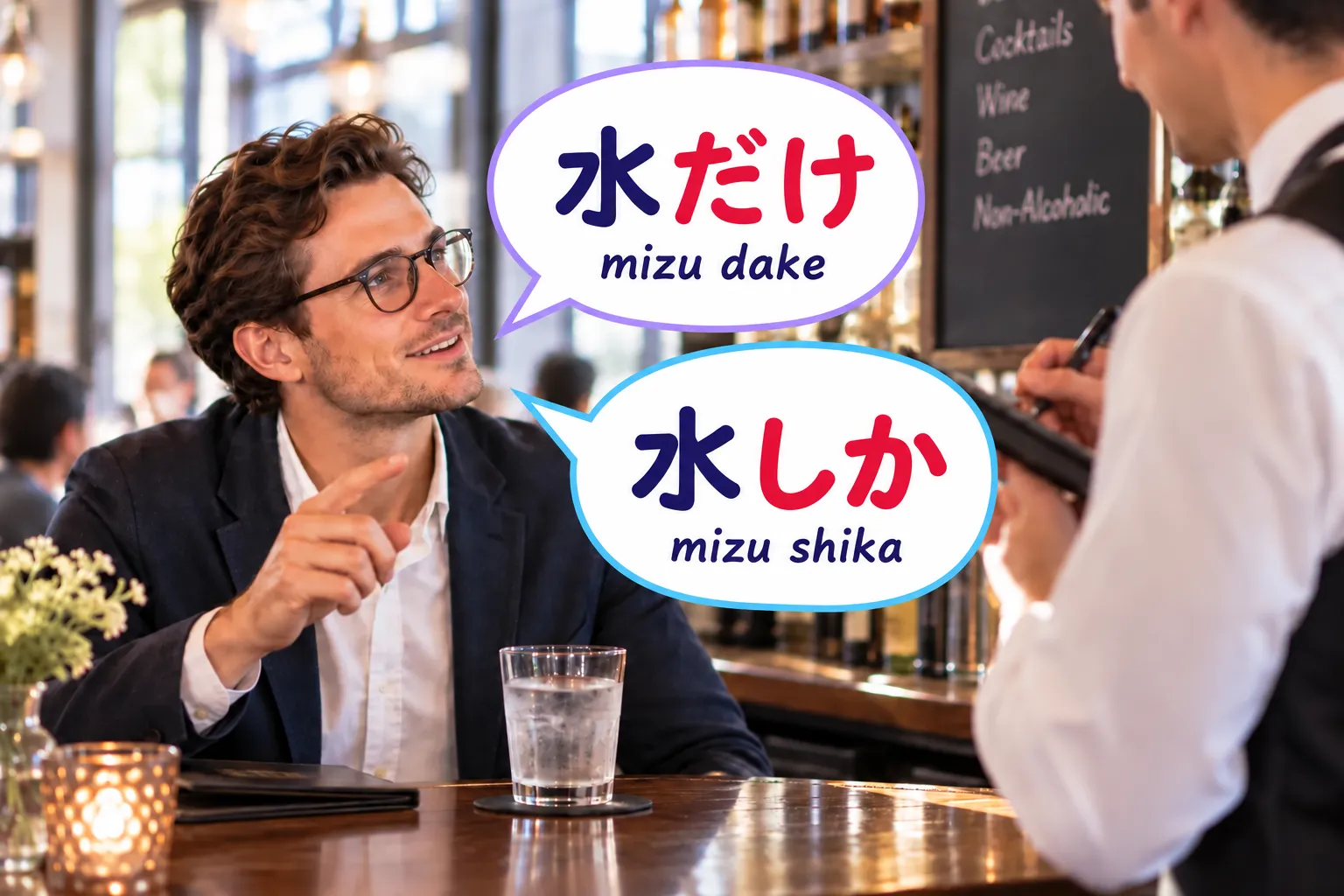
Look at these two sentences. They can both be translated as “I only drink water.”
水だけ飲みます。
mizu dake nomimasu.
I only drink water.
水しか飲みません。
mizu shika nomimasen.
I only drink water.
The basic meaning is similar, but the grammar is different. だけ simply limits the choice to water. しか is used with a negative form and can give a stronger feeling of “nothing except water.”
The Simple Difference: だけ vs しか
だけ (dake): Only
だけ means “only” or “just.” It is often a neutral way to limit something.
パンだけ食べました。
pan dake tabemashita.
I only ate bread.
しか (shika): Only / Nothing but
しか also limits something, but it must be used with a negative form.
パンしか食べませんでした。
pan shika tabemasen deshita.
I only ate bread.
Easy check:
だけ → Can be used with positive or negative forms.
しか → Use with a negative form to mean “only.”
When Do We Use だけ (dake)?
Use だけ when you want to limit something to one person, thing, amount, or choice. It often gives the information in a simple, neutral way.
水だけ飲みます。
mizu dake nomimasu.
I only drink water.
一人だけ来ました。
hitori dake kimashita.
Only one person came.
今日だけ休みます。
kyou dake yasumimasu.
I will take only today off.
In each sentence, だけ tells us what is included and limits it to that thing.
When Do We Use しか (shika)?
しか means that there is nothing or no one except the thing before it. The important grammar rule is:
しか is used with a negative form.
Noun + しか + negative verb
水しか飲みません。
mizu shika nomimasen.
I only drink water.
500円しかありません。
gohyaku-en shika arimasen.
I only have 500 yen.
田中さんしか来ませんでした。
Tanaka-san shika kimasen deshita.
Only Tanaka-san came.
The verb is negative in Japanese, but the natural English translation is usually “only.”
Same Meaning, Different Feeling
Sometimes both sentences describe the same fact, but the feeling can be different.
3人だけ来ました
3人だけ来ました。
sannin dake kimashita.
Only three people came.
This can simply give the number: three people and no more.
3人しか来ませんでした
3人しか来ませんでした。
sannin shika kimasen deshita.
Only three people came.
This can sound stronger and may suggest that three was fewer than expected.
The difference depends on the situation. しか~ない can make the limit feel stronger, but it does not always mean that the speaker is unhappy or disappointed.
Why Does しか Use a Negative Form?
This is one of the most important points to remember. With しか, the negative form is part of the grammar pattern.
パンだけ食べました。
I only ate bread.
パンしか食べませんでした。
I only ate bread.
Even though 食べませんでした is negative, the whole sentence does not mean “I did not eat bread.” It means that bread was the only thing I ate.
Be careful: だけ + negative verb is not the same pattern as しか~ない.
一人しか来ませんでした。
Only one person came.
一人だけ来ませんでした。
Only one person did not come.
だけ and しか in a Real Conversation
Here is a simple conversation about a party.
A: きのうのパーティー、だれが来ましたか。
B: 会社の友達だけ来ました。
A: 何人来ましたか。
B: 3人しか来ませんでした。
Why does B use both?
だけ simply tells us which group came: friends from work.
しか~ない emphasizes that the number was limited to three and may suggest that B expected more people.
Mini Quiz: だけ or しか?
Choose the best answer for each sentence. Pay attention to the verb form and the meaning.
Q1. 朝はコーヒー( )飲みます。
Show Answer
Answer: だけ
コーヒーだけ飲みます means “I only drink coffee.”
Q2. 財布に500円( )ありません。
Meaning: “I only have 500 yen in my wallet.”
Show Answer
Answer: しか
500円しかありません means “I only have 500 yen.”
Use しか with ありません to express this meaning.
Q3. 一人( )来ませんでした。
Meaning: “Only one person did not come.”
Show Answer
Answer: だけ
一人だけ来ませんでした means “Only one person did not come.”
Everyone else came.
Q4. 一人( )来ませんでした。
Meaning: “Only one person came.”
Show Answer
Answer: しか
一人しか来ませんでした means “Only one person came.”
Be careful: 一人だけ来ませんでした means “Only one person did not come.”
Practice Japanese Grammar in Real Conversations
Grammar becomes easier to understand when you compare similar expressions in real sentences.
In Japonin lessons, you can practice using Japanese while talking about your own experiences and ideas. Experienced Japanese teachers will help you use Japanese more naturally.

Japanese だけ vs しか: FAQ
Since 2006, Japonin has helped over 6,000 learners worldwide study Japanese online with support from experienced Japanese language teachers.

Written by Chiho Kamioka Founder of Japonin
When learning だけ and しか, do not look only at the English word “only.” Pay attention to the verb form and the meaning of the whole sentence. Seeing the two patterns side by side makes the difference much easier to understand.
Ready to improve your Japanese?
Study Japanese with experienced teachers at Japonin.
Try two 50-minute live lessons and take the next step in your Japanese learning.
More Beginner Japanese Particle Guides
Explore more Japonin guides to understand common Japanese particles and how their meanings change in real sentences.
See all Beginner Particle Comparisons →